
Unmanned Delivery Vehicles in 2026: Comparing Cost, Road Rights and City Reliability
Unmanned delivery vehicles in 2026 are not toys, but they are not mature public services either. The direct answer is that low operating costs have pushed them onto city streets faster than regulation, insurance practice and mixed-traffic manners can absorb. In Hangzhou and many Chinese cities, the vehicles look absurd because they sit between proven pilot economics and unfinished road-rights design.
By James Hartley, IT Insights
What changed between early demos and the 2026 street scene?
They are no longer confined to campuses. Ten years ago, JD, Cainiao and Meituan began exploring driverless delivery, but immature sensors and absent rules kept them in closed areas. The shift came in 2021, when public-road permission appeared in some regions. To date, operators can now move parcels along pre-approved streets, although coverage is rarely citywide.
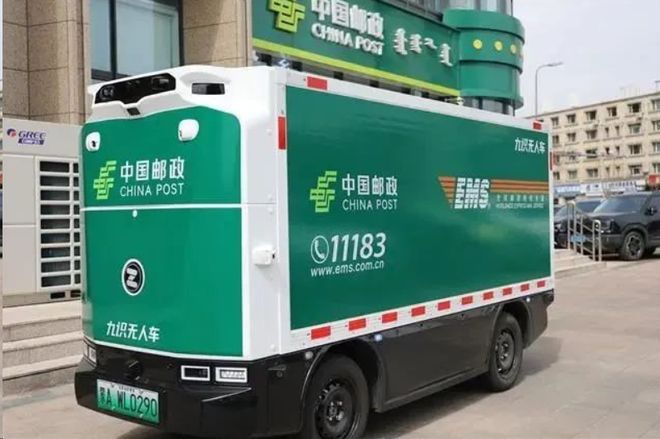
China Post provides one of the clearest scale markers. It said in late July that it had put nearly 5,000 vehicles across 31 provinces and 263 cities on duty, and had carried 130 million parcels. A separate 2026 industry report citing the State Post Bureau said more than 16,000 unmanned delivery vehicles and over 400 drones had entered service, but the operational model remains mostly station-to-station, not front-door courier replacement.
Why are funny-looking vehicles still investment material?
Because capital prices them as capacity, not comedy. Recently, Shichao noted, the vehicles became social-media jokes in Hangzhou, then a few days ago autonomous company Neolix completed a Series E round of nearly USD 400 million, pushing cumulative funding past the 10 billion mark. The joke and the deal are not contradictory: the joke shows public visibility, while the deal shows that investors expect route density, not one-off novelty.
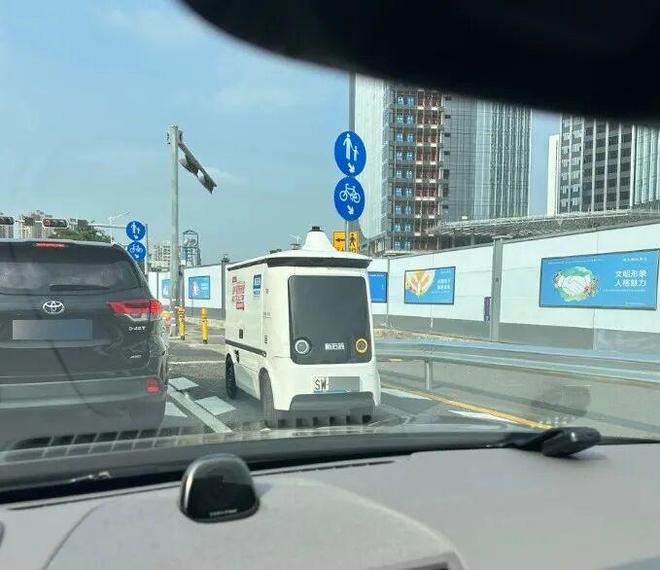
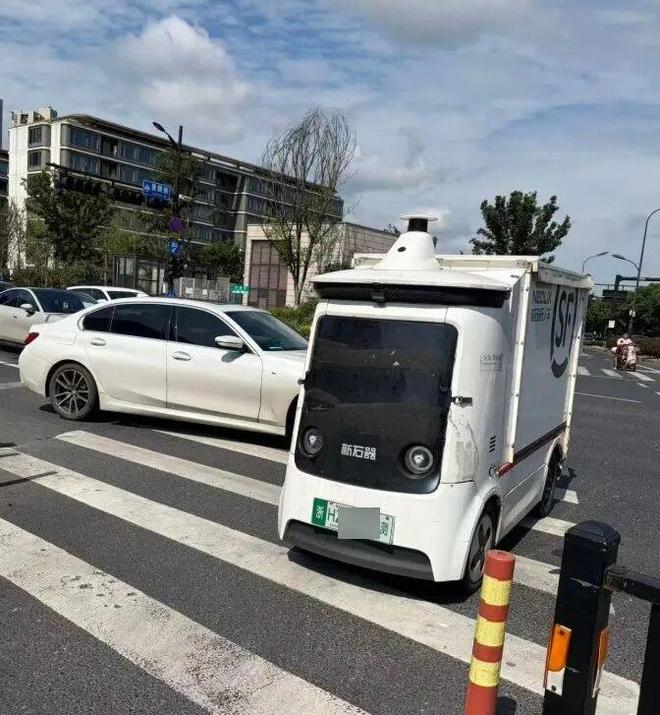
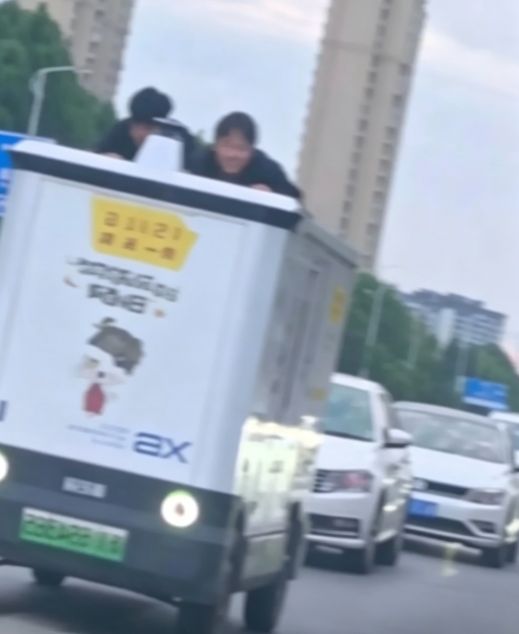
The meme comes from behavior that looks human but is not socially trained. In one widely shared sequence, the vehicle seemed to be processing Lu Xun’s idea that roads are made by enough travelers: it slipped into car lanes, slow-traffic lanes, open asphalt and even pedestrian space. Its CPU was not being philosophical; it was following a route while other users moved around it.
Is it safe to share a lane with a driverless parcel box?
Share the street, but do not test it. Shichao’s practical warning is to keep distance: the vehicles can brake suddenly, restart unexpectedly or wait through a conflict until they can prove a path. They are required to observe traffic rules, and accidents are handled by traffic police with a responsibility determination, but liability can still be messy because there is no seated driver to serve as the obvious responsible subject.
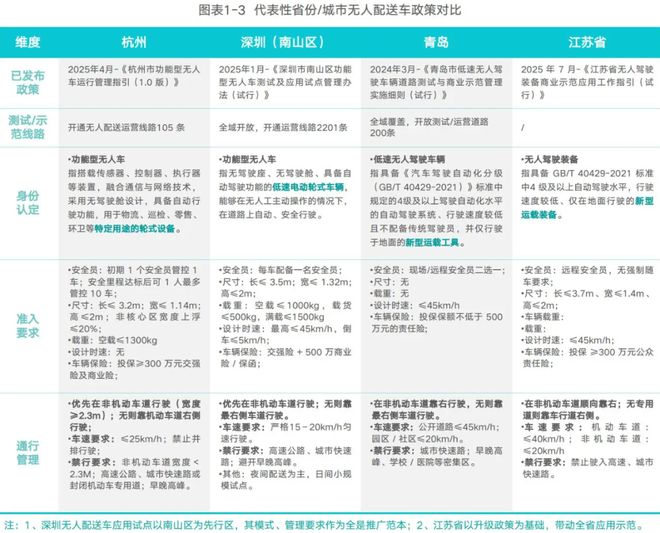
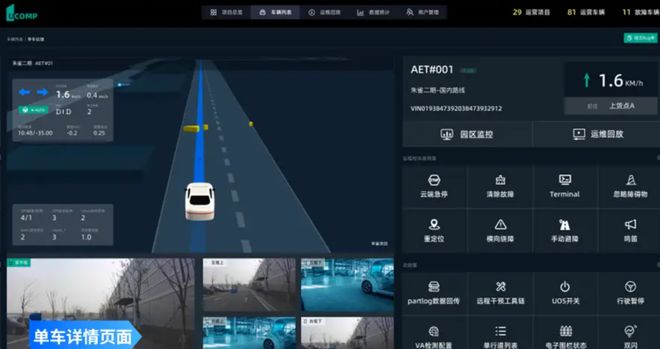
Operating rules usually specify size, top speed, remote safety staffing and insurance. Insurance is often million-level. A remote operator typically watches a handful or a dozen-plus vehicles, so an unusual event can be seen, but human takeover may arrive late if the vehicle is physically blocked.
Why did adoption move so fast? A cost comparison
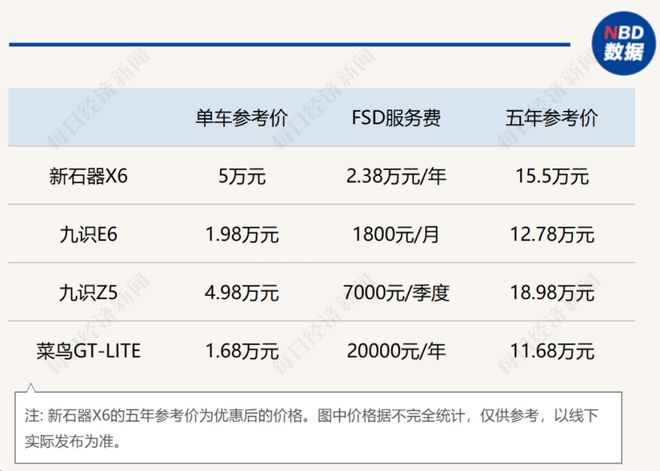
The root cause is cheap logistics. In 2018, the operating cost of this category was still million-level. Last year, a bare vehicle could be bought for 20,000 to 30,000, and an annual service fee was a little over 20,000. Over five years, total use cost is commonly around 120,000. A securities estimate converts that into a monthly figure of around 2,500, including depreciation, FSD service fees and electricity.
| Cost item | Unmanned logistics vehicle | Traditional logistics vehicle |
|---|---|---|
| Monthly cost | Around 2,500, including depreciation, FSD service fee and electricity | 7,700 yuan, including depreciation, driver wage and fuel |
| Five-year view | Commonly around 120,000 | Depends heavily on wage, fuel and vehicle replacement |
| Scale exposure | Useful for repeat short routes | Useful for variable, human-judged routes |
For a network like SF Express, the arithmetic is uncomfortable for any manager to ignore: end-stop delivery vehicles can number in the tens of thousands, or even more than 100,000. If a repeatable route moves from wage-plus-fuel to service-plus-electricity, the savings do not need to be large to matter. But entry-level vehicles mostly handle hub-to-hub transfer; county-to-county or village-to-village missions require a higher-grade vehicle and a different price.
Where road rights still decide the user experience
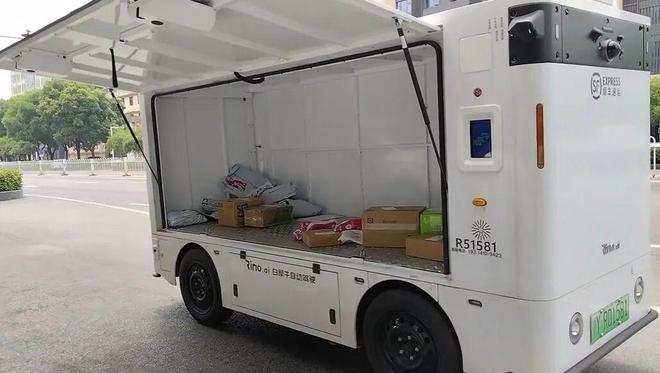
Road rights are the first constraint, not algorithms alone. A courier told Shichao that their station once ran several unmanned vehicles, but traffic police controls mean the vehicles cannot be used during morning and evening rush hours, or during school arrival and dismissal periods. Sometimes only a few routes are available. For commuters, the result feels arbitrary: the vehicle has permission, yet the network is throttled when public roads are most human.
Reliability is also uneven. Another delivery worker said the vehicle makes work lighter, but added the memorable line: "If it stays away too long, you have to go find where it is stuck." In early morning rush hour, a stopped vehicle can block a lane and make a commuter late. That is the real product issue: the machine may be cheap and legal, but the city does not yet have a standardized way to handle its small failures.
Regulators are trying to narrow that gap. Public-security traffic rules and industry documents now discuss speed tiers, prohibited roads and night operations; in July 2026, a national public-security traffic standard took effect, giving operators a common checklist. The Sina Finance report explains that it addresses fragmented local policies. Still, the standard is an operational baseline, not a complete legal identity for driverless cargo vehicles.
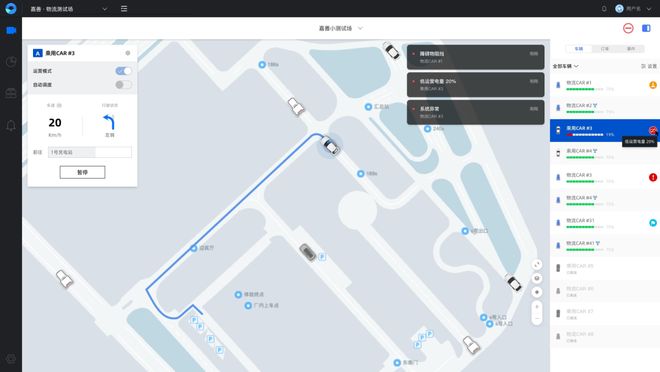
For readers, the rule of thumb: if a vehicle has no clear fallback plan for being blocked, it is still a trial service. If it reports low battery, obstacle, system fault and remote status in a public console, it is closer to utility.
Is it only a courier gadget, or city capacity?
It is not only courier. The more precise category is unmanned logistics capacity. Jiushi Intelligence said this year that parcel delivery is less than 40% of use; in last Q3 it was around 50%. The remaining 60% shows why: a driverless cargo box can handle store replenishment, instant logistics and other point-to-point moves. It can also carry small parcels in a route where a Didi-style van feels too expensive, and it can run charity or low-margin tasks that humans do not want to repeat.
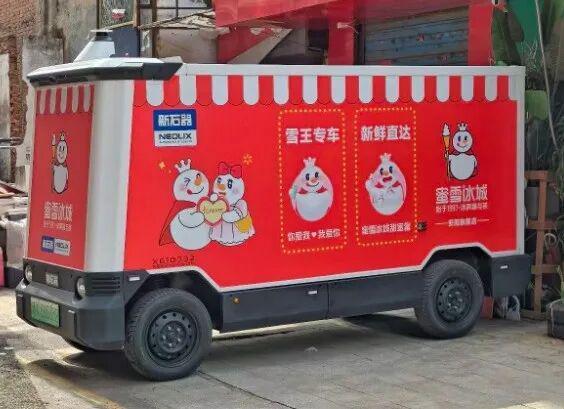
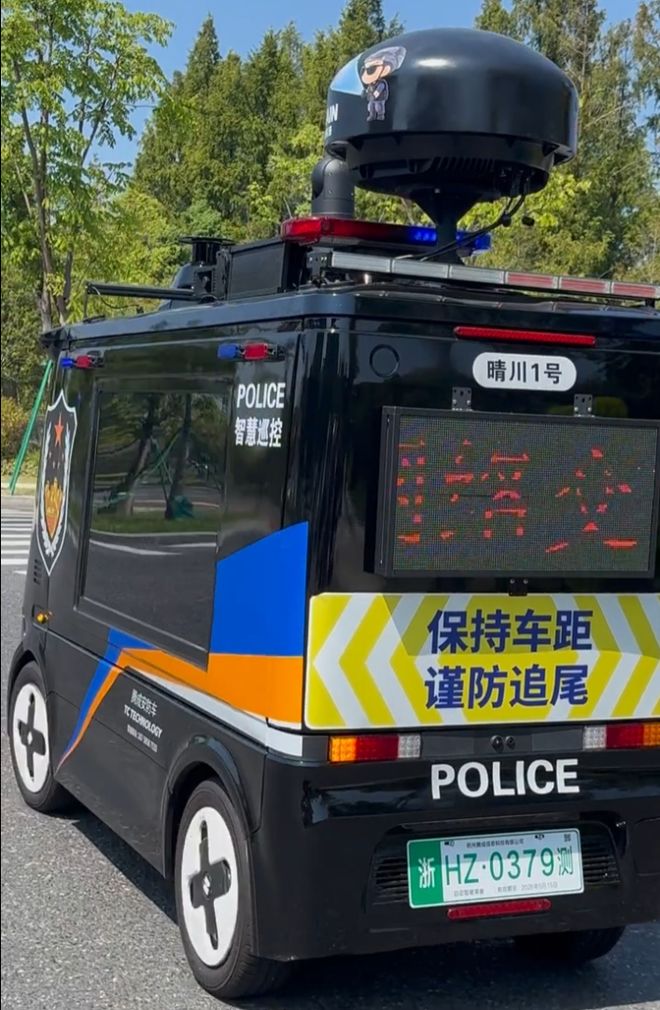
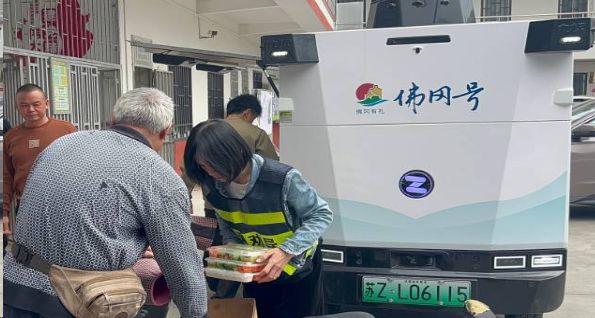
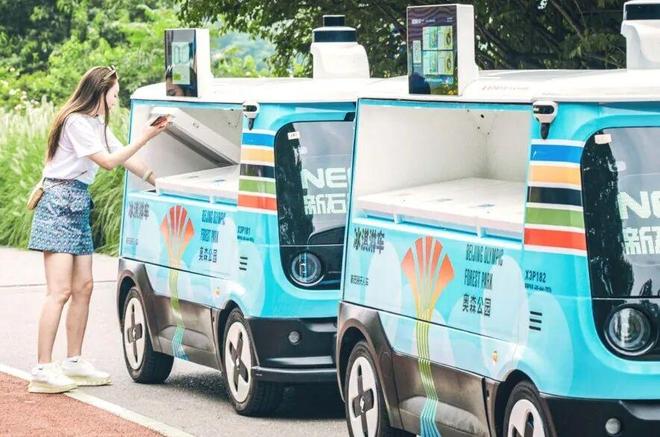
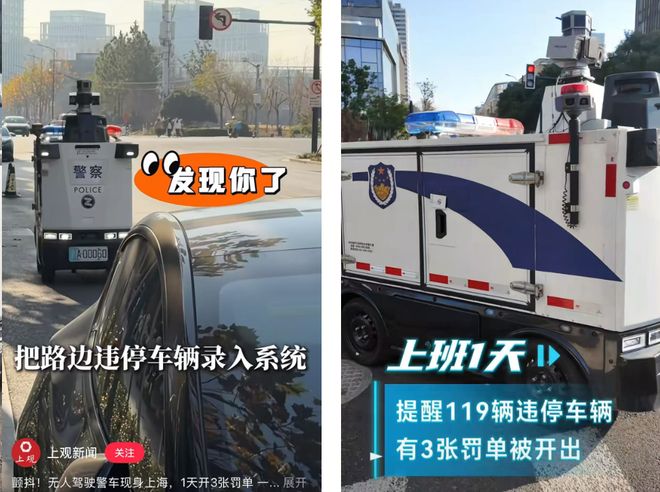
Examples include community support for older residents: one service may visit more than 10 meal points, where a dedicated driver would cost more than the social value allows. The vehicle drops supplies, volunteers finish delivery. Add a freezer and the same box can sell ice cream in scenic areas; add a display and it becomes advertising space. In Yuhang, Hangzhou, the most visible variant for Shichao is not a parcel vehicle but a police unit: it can identify violations, photograph them for manual review at a police station, offer one-button alarm, and carry first-aid or fire-fighting supplies that can be unlocked remotely when needed.
Common misconceptions: what the street clips do not prove
- Misconception: every clip of a confused vehicle proves poor technology. Correction: in controlled environments many vehicles avoid obstacles and keep schedules. In mixed traffic, rules, speed limits and right-of-way ambiguity create more visible failure than raw sensor capability.
- Misconception: they replace couriers. Correction: the first use case is repetitive station transfer; couriers still handle exceptions, customer contact and last-door service.
- Misconception: a licence plate means full equality with cars. Correction: these vehicles are still managed as a special low-speed category with local route approval, and legal classification is not identical to passenger cars.
- Misconception: cost advantage means everywhere deployment. Correction: route density matters. Sparse, irregular or heavily congested corridors can erase the 2,500 versus 7,700 yuan monthly advantage.
Action checklist: who should compare, buy or avoid
- Logistics managers: compare fixed, short, repetitive routes first, such as station to station. Require telemetry for obstacle events, low battery and takeover latency.
- Local governments: publish route boundaries, permitted lanes and clear night rules. Do not leave every company to interpret a city’s tolerance.
- Pedestrians and drivers: give the vehicle a wide berth; do not assume it can negotiate a hand signal or a social standoff.
- Retail and community services: use them where a low-margin, high-frequency transfer is repetitive, such as replenishment or meal-point delivery, but keep volunteers or staff as the human exception handler.
- Consumers: expect better etiquette as insurance and rules improve. The best sign of maturity is not fewer videos, but fewer blocked intersections.
FAQ: quick answers for general readers
Are unmanned delivery vehicles legal in 2026?
They are legal where a city grants route access and the operator meets local size, speed, insurance and supervision requirements. A July 2026 national public-security traffic standard provides a baseline, but local approval remains central.
Can they replace human couriers?
Not soon. They are best at predictable transport between nodes. Human couriers still handle doors, payment, damaged packages, customer questions and situations requiring social judgment.
What is the most important cost fact?
The vehicle’s economics are strong when routes repeat. The article’s comparison is around 2,500 monthly for unmanned operation versus 7,700 yuan for a conventional courier vehicle, once depreciation, driver wage, FSD service fee, fuel and electricity are considered.
Why do people see them stopped in the road?
Because a conservative machine may choose a safe stop when a human would bluff through a gap. The result can be a blocked lane, especially during morning rush hour, even when the vehicle itself has no mechanical fault.
Will they become ordinary city utilities?
Possibly, but as capacity rather than gadgets. The strongest signal is Jiushi Intelligence’s report that parcel work was already below 40% of use; store delivery, community services, vending and public security show where the market may go next.