
The Year Martech Stopped Growing: What 15,505 Products and 0.79% Growth Reveal About Your Stack
Case review by James Hartley, IT Insights — General channel, ItInsightsWorld.
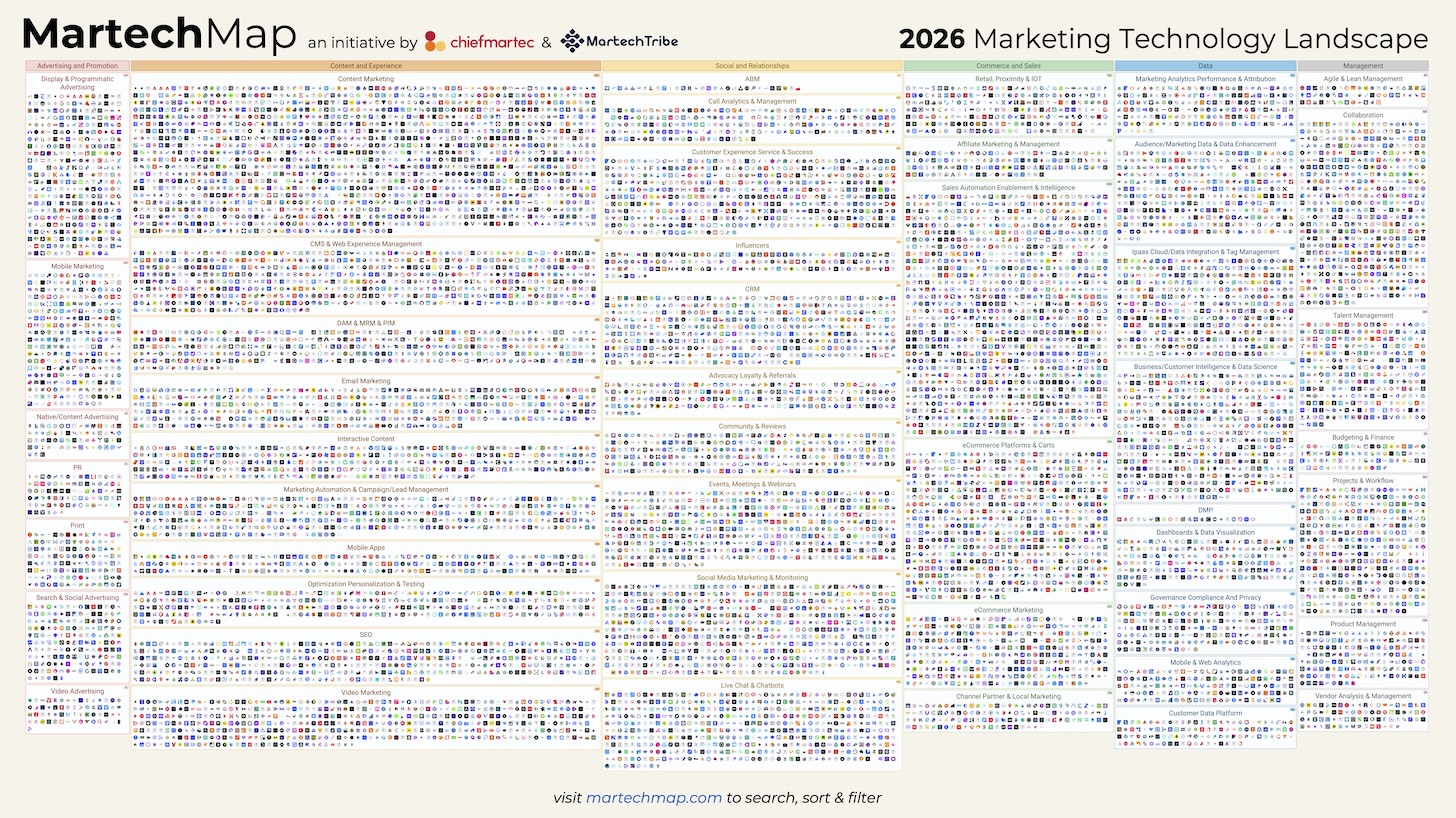
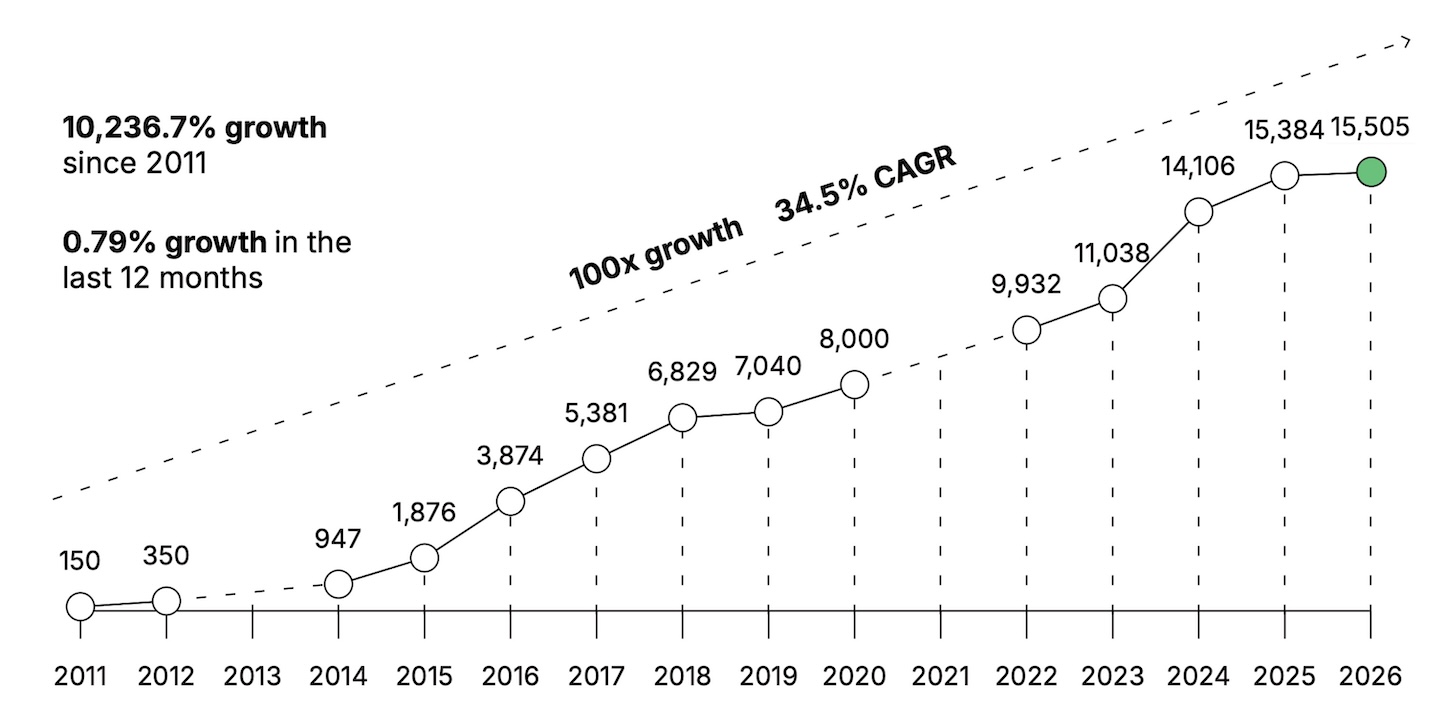
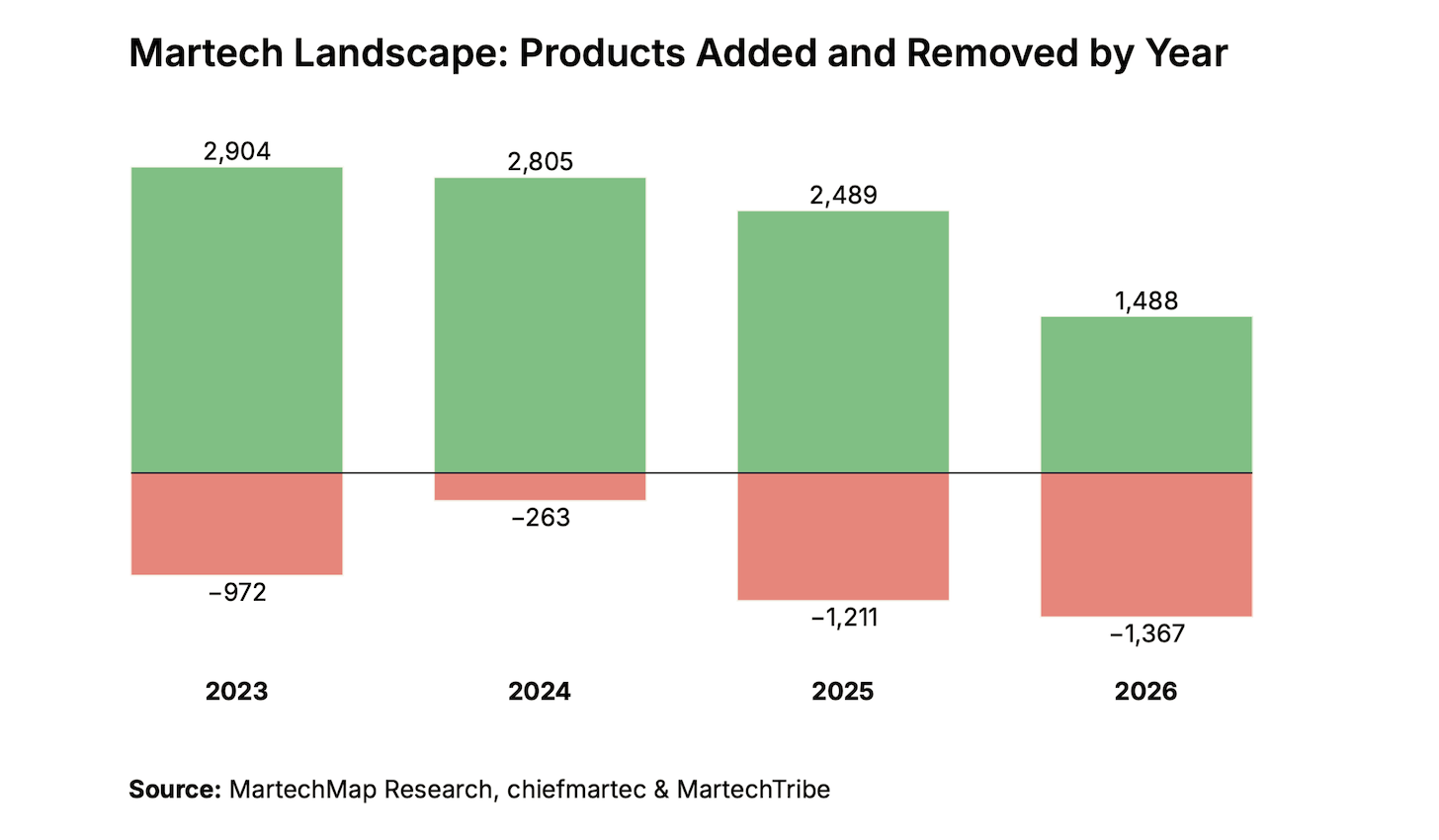
The short answer: the tool boom stopped, the tool war did not. The 2026 Marketing Technology Landscape lists 15,505 products, up only 0.79% from the 15,384 counted last year — a gain of 121 net products and the flattest line in 15 years. The headline looks frozen; the rows underneath it do not. In the same stretch 1,488 products entered the map and 1,367 were removed, so almost nothing grew while nearly everything changed.
For readers who do not work in marketing software, that gap between a still surface and a restless seabed is the useful part. It is a clean case of how a market matures: the number everybody quotes is rarely the number that decides anything.
What does the 15-year curve look like before 2026?
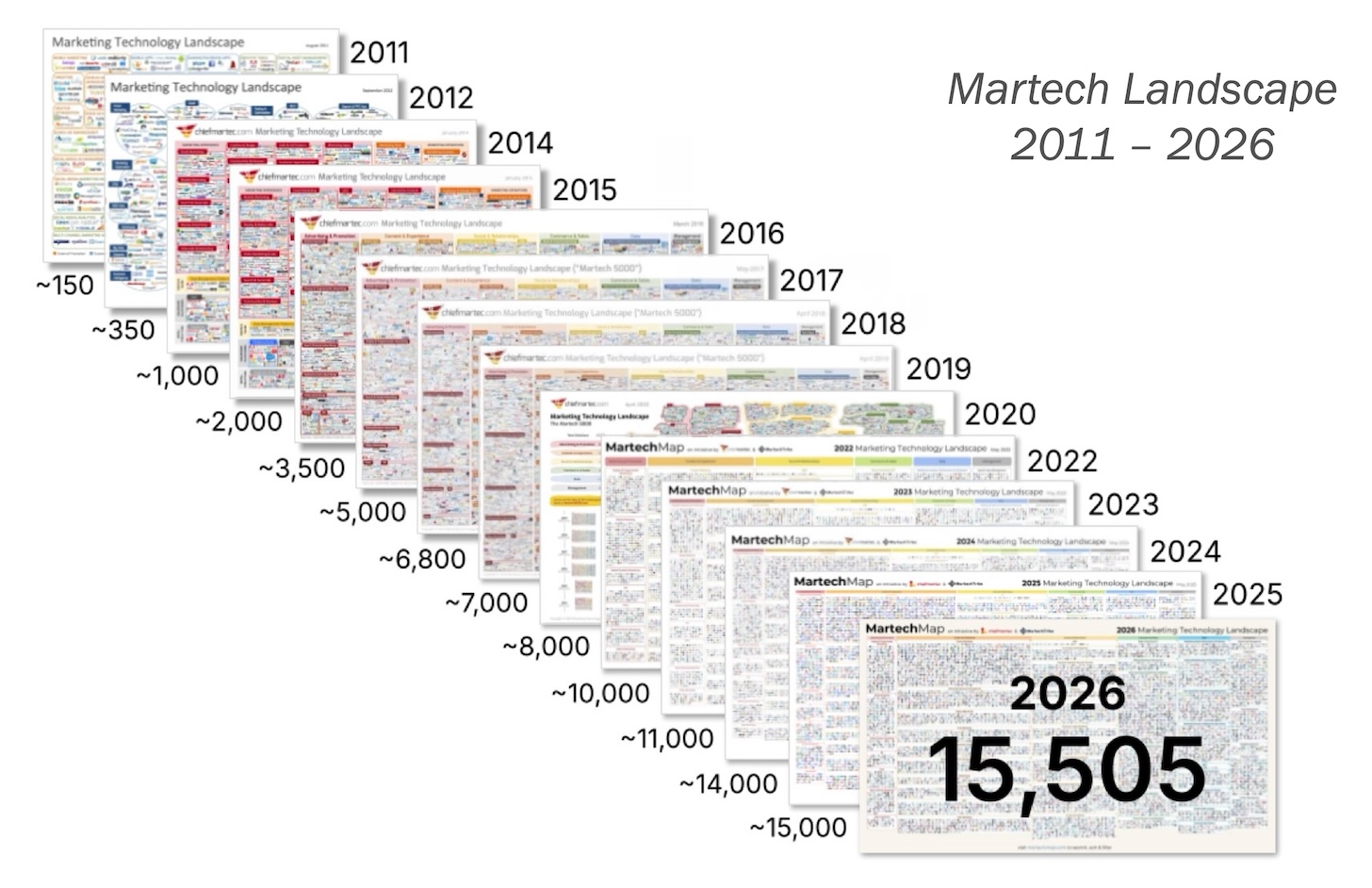
Conclusion first: growth was never ended by a crash — it was ended by saturation. The map started at roughly 150 products in 2011. Measured against more than 15,000 products on today's list, the long-run climb is a 100X rise, or 10,236.7%.
Some years in that series grew a lot; a few grew absurdly. Every time analysts declared consolidation inevitable, the map found another gear, rather like the dinosaurs in Jurassic Park finding a way over the fence. Many readers said "peak martech" in 2019, and again in 2023, and again last year. This is the first edition where the data allows the phrase to survive a serious challenge.
The practical lesson for anyone who reads trend charts: a line that has only ever gone up makes a flat year feel like a collapse. It usually is not a collapse. It is a change in how growth is expressed.
Is the martech market frozen or moving?
Conclusion first: it is moving faster than the headline suggests — the flat count is an arithmetic coincidence, not a truce.
| Movement on the map | Last year | This year (2026) | Change |
|---|---|---|---|
| Products added | 2,489 products | 1,488 products | down 40% |
| Products removed | 1,211 | 1,367 | up 13% |
| Net change | larger | 121 net products | nearly zero |
New entries and exits almost cancelled each other out. Look at who left, and the picture sharpens: the 2010-2019 SaaS wave accounted for 51.7% of this year's exits. That is not simply the thin AI wrappers of the first ChatGPT gold rush being swept away — a whole generation of early cloud marketing software is being replaced.
The exit pressure clustered in small companies. By revenue, 45.5% of removed products sat in the $1M-$10M band. By headcount, 41.2% had 1-10 employees and 38.7% had 11-50. These firms had enough traction to become real businesses but not enough to become unavoidable ones. When large incumbents bundle AI from above, AI-native startups push from below and buyers rationalise what they already pay for, the middle is where the air gets squeezed.
One more datapoint raises the stakes for ordinary buyers. Gartner's 2025 Marketing Technology Survey found that only 49% of martech tools are actively used — meaning most stacks already carry paid shelfware. The real vendor risk is therefore not that a supplier disappears; it is that you cannot tell which of your own tools would vanish quietly if it did.
Why are the oldest categories growing the fastest?
Conclusion first: AI is not only inventing new software; it is reactivating old software, which is why the growth now hides inside categories that sound finished.
- CMS and web experience management: up 21.4%, from 504 to 612 products.
- Ecommerce platforms and carts: up 19.9%, from 547 to 656.
The reason is who is showing up at a website. For two decades, pages were written for humans and for search crawlers. Now machines acting on behalf of humans — AI search assistants, agentic browsers, shopping agents, procurement agents and answer engines — arrive wanting to extract, compare, summarise, verify and act, not merely to browse.
That shift is no longer a forecast. Adobe's quarterly AI traffic data recorded a 393% year-over-year jump in visits from AI sources to US retail sites in the first quarter of 2026, and a 269% rise in March alone; the company also reported that AI-referred visitors, who had converted worse than ordinary traffic twelve months earlier, were converting better by March 2026. Boston Consulting Group's survey of 150 retailers and brands found 68% expect AI shopping agents to significantly reshape commerce within two years. This is the evidence that the CMS and ecommerce growth on the map is a response to real traffic, not a bookkeeping artefact.
On the human side, the same technology is being used to enrich what a visitor experiences: agents deployed as guides, advisors, configurators, concierges and sales assistants, drawing on product data, content, customer history, pricing, policies, inventory, reviews and brand guidelines. That makes context engineering decisive. The quality of the experience depends less on the model alone and more on accessible context, usable tools, permitted actions and governing guardrails.
Clean, structured, machine-readable catalog data does double duty: it lets external AI systems understand what you sell, and it powers richer on-site shopping — AI concierges that compare options, explain trade-offs, assemble bundles, answer compatibility questions and walk customers through difficult choices. The future web may feel less like navigating pages and more like working with a knowledgeable guide.
How the reactivation spreads across mature subcategories
| Subcategory | Growth | What is actually changing |
|---|---|---|
| Mobile & Web Analytics | 11.3% | Measuring machine visitors as well as human ones |
| Call Analytics | 8.9% | Conversations increasingly mediated by assistants |
| iPaaS/Data Integration | 8.0% | Feeding context to agents across systems |
| Governance, Compliance & Privacy | 7.1% | Setting permitted actions and guardrails |
| Marketing Automation & Campaign/Lead Management | 5.9% | Orchestrating journeys that start outside the brand's own site |
What does the plateau mean for an ordinary budget?
Conclusion first: fewer tools, but not automatically less money — and certainly less certainty about who will still exist in three years. Gartner's 2026 CMO Spend Survey, published 11 May 2026, found marketing budgets holding around 7.8% of revenue while CMOs now allocate 15.3% of that budget to AI, with only 30% reporting readiness to scale those capabilities. The same survey put martech's share of the marketing budget at a five-year low of 19.4%, down from 26.6% in 2021 — so the tool count is flat while the money is being redistributed.
Scott Brinker, who has published the landscape since 2011, told CMSWire that the flat headline number buries the real story: AI is exposing what has been happening underneath the stack. Read alongside the churn data, his point is easy to translate for any organisation: the market stopped growing outward and started growing inward.
Five misconceptions this case clears up
- "Zero growth means a dead market." It means additions and exits nearly offset: 1,488 products in, 1,367 out.
- "The purge only hit thin AI wrappers." The 2010-2019 SaaS generation made 51.7% of this year's exits.
- "Only tiny vendors are at risk." Nearly half of the removed products sat in the $1M-$10M revenue band.
- "Mature categories are finished." CMS grew 21.4% and ecommerce 19.9%, both from bases of 504 and 547 products.
- "Buying AI tools is the same as being AI-ready." Only 30% of CMOs surveyed said they are ready to scale what they fund.
A reusable six-step check for your own tool list
- Count usage, not licences: flag every tool that fewer than half of its named users open weekly.
- Ask the disappearance test for each supplier: what breaks if it is gone in twelve months, and is there a written exit plan?
- Score the small-vendor premium: firms under 50 employees win on speed and lose on continuity, so give them a shorter contract, not a longer one.
- Check machine-readability: could an agent read your catalog, prices, policies and inventory without guessing?
- Prefer integration over addition — the fastest-growing categories on the map are plumbing, not paint.
- Re-check context before model: guardrails, permissions and data quality decide whether an agent experience works.
FAQ: the 2026 martech landscape, answered
How many marketing technology products are there in 2026?
15,505 products, up 0.79% on last year's 15,384 — a net change of 121 net products.
Has the martech market really peaked?
By product count, plausibly yes for the first time in 15 years. By churn and by category, no: the map is churning, and mature categories are expanding.
Should a small business worry about its software vendor vanishing?
Yes, proportionally more than before. With 45.5% of exits in the $1M-$10M band and 41.2% at 1-10 employees, continuity clauses and exportable data matter more than feature checklists.
Where can the full analysis be read?
In the State of Martech 2026 report, with the interactive map referenced through MartechMap.com.
Where the numbers come from
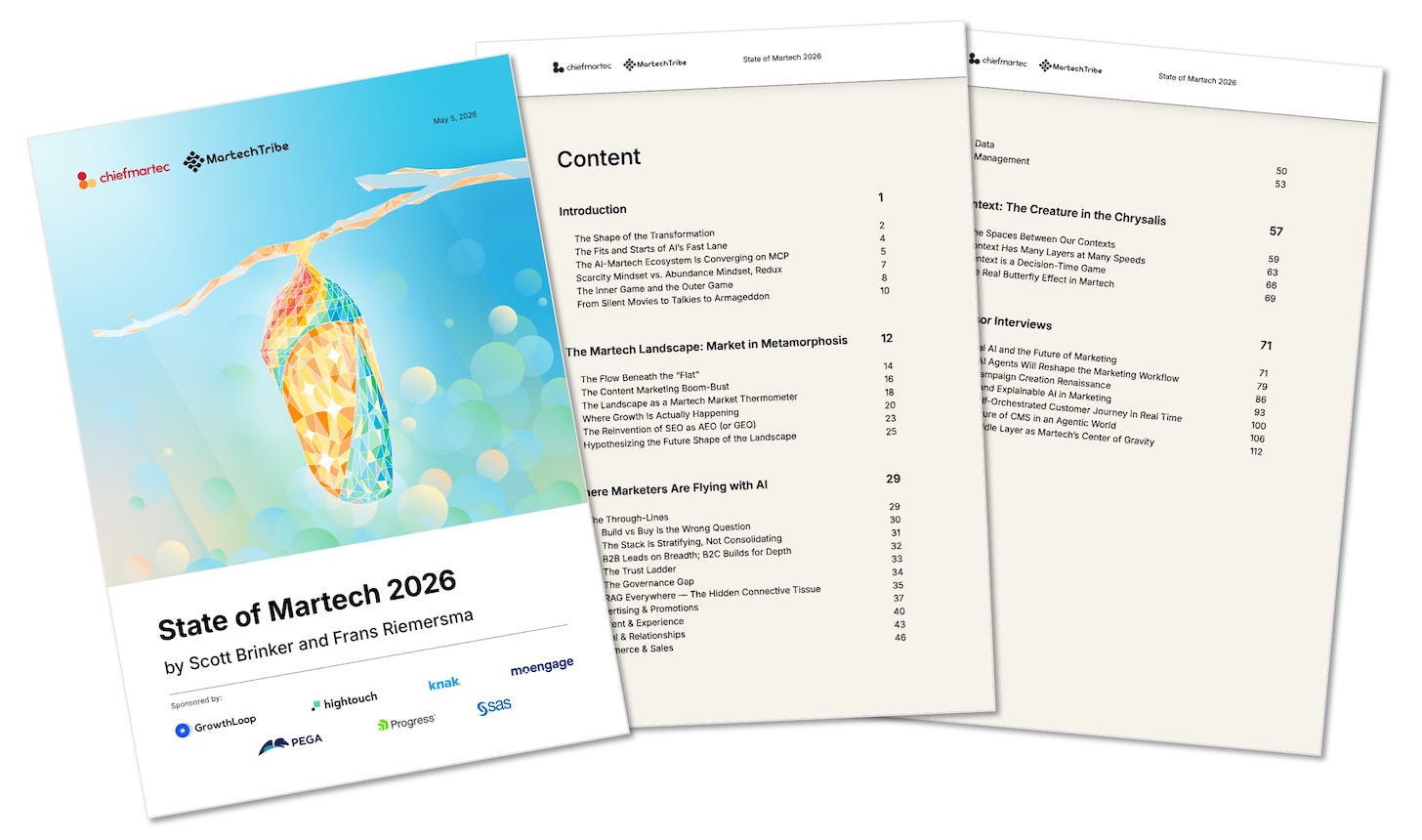
The observations above cover only part of the full State of Martech 2026 report. It contains the complete 2026 Marketing Technology Landscape, analysis across 15,000+ martech products, a deep dive into 70 AI use cases in marketing, and a chapter on context as the connective tissue of AI-powered marketing. The research was sponsored by GrowthLoop, Hightouch, Knak, MoEngage, Pega, Progress, and SAS.
So the map may have reached its widest point, but these still waters run deep — and the case is a general one: whenever a headline metric goes flat, look for the churn underneath it before you rewrite your plans.
Reference sources
- chiefmartec.com — 2026 Marketing Technology Landscape Supergraphic, 5 May 2026
- Gartner — 2026 CMO Spend Survey press release, 11 May 2026
- Gartner — Marketing Technology Survey (tool utilization)
- Adobe Business — quarterly AI traffic report, Q1 2026
- Boston Consulting Group — retailers and AI shopping agents, 2026
- CMSWire — interview with Scott Brinker, 5 May 2026
Corrections and story tips: contact the IT Insights newsroom at contact@itinsights.com. Written by James Hartley for ItInsightsWorld.