
Waymo Toyota bZ4X: An AIapplications Guide to Factory-Built Robotaxis | ItInsightsWorld
For teams that track applied AI, the most useful detail in the latest Waymo and Toyota Motor agreement is not the car name but the workflow. The companies have moved to a deeper collaboration: Toyota’s pure-electric SUV bZ4X will become the base for a next-generation autonomous taxi shaped around Waymo Driver, Alphabet’s Google-backed self-driving stack. The public schedule starts with small-scale tests in Japan in 2027, then a staged path toward the United Kingdom and other international markets.
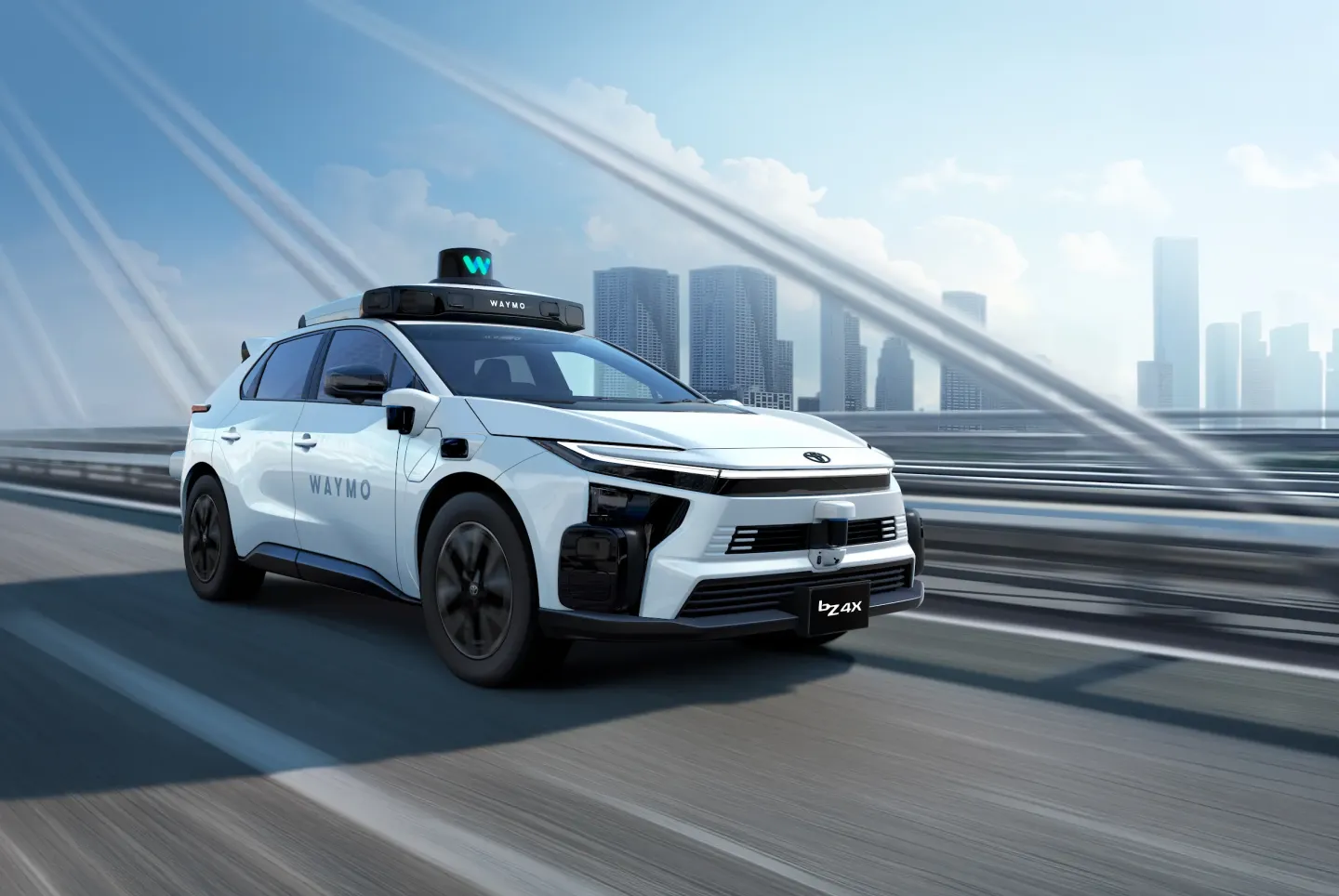
Case read: why the production line is the AI application story
Robotaxis are no longer only a sensing and policy problem. In this arrangement, Waymo is broadening its vehicle portfolio beyond the Jaguar I-Pace, while Toyota is using a commercially operating Waymo L4 technology system to explore commercialization of autonomous transportation services and accumulate related technical experience. The key change is where the AI hardware appears. Instead of taking ordinary mass-produced vehicles back to a separate conversion stage, the plan aims to put autonomous equipment into the manufacturing flow.
The announced location is the Takaoka Plant in Toyota City, Aichi Prefecture, Japan. Base vehicle production, Waymo hardware installation, and autonomous system integration are intended to happen inside the same factory environment. That matters for AI application leaders because scale depends on repeatability: reducing post-line disassembly, retrofitting, and reassembly can lower labor cost, logistics cost, and later maintenance complexity. The article explicitly links this factory integration to the needs of large-scale deployment.
What Waymo Driver includes, and what remains undisclosed
- The vehicles are planned to use Waymo Driver, the company’s L4-level autonomous system.
- Known sensing and compute elements include cameras, lidar, millimeter-wave radar, and onboard compute equipment.
- The exact generation of autonomous hardware used for this Toyota bZ4X robotaxi has not been disclosed.
- The full sensor count and complete technical parameter list have not been published.
This gap is important when writing a procurement or pilot brief. The public facts establish the product direction, not the bill of materials.
Passenger experience as an operational requirement
The adapted bZ4X is also designed around boarding and riding without a driver. The planned cabin and access features include more rear-seat legroom, automatic doors, an electric tailgate, and ambient lighting. These are not cosmetic additions. They matter for older passengers, people with limited mobility, and travelers carrying luggage, because autonomous taxis must solve not only safe driving but also how passengers enter, where luggage goes, and how the ride is completed without driver assistance.
For AI application teams, that expands the success metric from 'the car drives itself' to 'the service works as a flow'. The vehicle must address entrance behavior, luggage handling, seating access, hand-off to the cabin, and the end-of-trip process.
Step-by-step deployment path implied by the announcement
- April 2025: the two parties announce a preliminary agreement to explore a jointly developed autonomous vehicle platform.
- The plan narrows: Toyota becomes one of Waymo’s important vehicle suppliers for international expansion.
- A dedicated robotaxi variant is defined around the Toyota bZ4X and Waymo Driver.
- Manufacturing is aligned to the Takaoka Plant in Toyota City, Aichi Prefecture, so base vehicle and AV integration share one facility.
- Passenger-facing hardware and access features are tailored to driverless ride service.
- 2027: Japan becomes the first market for small-scale testing and validation.
- Testing will examine adaptation to local traffic rules, road signs, and driving habits.
- After Japan, the United Kingdom is the next major target, followed by gradual movement into other international markets.
Comparison table: past retrofit logic versus factory-integrated logic
| Dimension | Past retrofit path | Waymo–Toyota bZ4X plan |
|---|---|---|
| Integration point | Ordinary mass-production cars are modified after leaving the standard assembly route. | Autonomous hardware is installed at the same factory producing the base vehicle. |
| Work after production | Disassembly, retrofitting, and reassembly can remain part of the process. | The stated goal is to reduce that extra post-line work. |
| Cost pressure | Labor, logistics, and later maintenance complexity can be higher. | Reducing those steps may lower cost and maintenance complexity. |
| Scale relevance | Conversion-heavy flows are less relevant when large-scale robotaxi business is required. | Manufacturing standardization is treated as especially important for large-scale deployment. |
Why the fleet mix matters: Waymo’s other vehicle programs
The Toyota bZ4X is one piece of a wider vehicle strategy. Waymo already has multiple sources of autonomous vehicles. In addition to the Jaguar I-Pace, it has the Ojai, an autonomous small bus developed with ZEEKR, a brand under China’s Geely. It also has plans involving the Hyundai Motor Ioniq 5. The Ojai uses ZEEKR’s SEA-M architecture, is developed for autonomous taxi demand, and has already started providing ride service to some users.
The common thread is platform diversification plus software unification. Waymo wants different vehicle models to carry a unified sixth-generation autonomous system, thereby reducing dependence on a single automaker. That is an application-architecture point, not merely a supply-chain point.
Japan first, then the United Kingdom: shared left-hand traffic, different validation
The 2027 Japan phase is explicitly a test and validation stage, not a declaration that nationwide driverless taxi service is imminent. Neither the first bZ4X robotaxi quantity nor an exact Japanese commercial operation date has been published. The practical task is to see how the vehicles and system behave under Japanese traffic rules, road signage, and local driving habits.
The United Kingdom is then positioned as another important market. Because Japan and the United Kingdom both use left-hand traffic and right-hand-drive vehicle arrangements, the companies can accumulate some technology and operating experience with common features across the two markets. Still, entering the United Kingdom requires corresponding validation for local road environment and regulatory requirements.
Beyond taxis: private vehicles, Woven by Toyota, and safety data
Waymo and Toyota have also said they will continue studying how Waymo’s autonomous technology could be applied to private passenger cars. That keeps the agreement open to consumer vehicles as well as robotaxis. Toyota’s software and mobility subsidiary Woven by Toyota will participate in related cooperation. The two sides want to use data accumulated from Waymo’s real-road operations to study how to improve overall safety of vehicles and road infrastructure.
The foundation of this cooperation is the preliminary agreement announced in April 2025. At that time, the two companies said they would explore the possibility of jointly developing an autonomous vehicle platform. After further consultations, the direction became clearer, and Toyota is expected to become one of the important vehicle suppliers for Waymo’s international expansion.
What this case suggests for enterprise AI leaders
Checklist before evaluating a physical-AI pilot
- Where will hardware integration occur: after production, in a conversion facility, or inside the original factory flow?
- What parts of the service flow change when no employee is present: boarding, loading, seating, and exit?
- Which market-specific rules must be tested before expansion: traffic law, signage, road behavior, and regulator requirements?
- Which facts are public product claims and which remain undisclosed component specifications?
- How will the program move from R&D to operations: procurement, maintenance, fleet utilization, and cost of modifications?
Common misconceptions to avoid
- Reading 2027 Japan testing as immediate national commercial rollout. The published plan says testing and validation, with no exact start date.
- Assuming left-hand traffic transfer removes local validation in the United Kingdom. The announcement still requires UK-specific checks.
- Treating robotaxi commercialization as only a self-driving model problem. The text emphasizes vehicle procurement, modification cost, fleet utilization, and manufacturing and maintenance systems that can support tens of thousands of vehicles.
- Confusing fleet-wide software goals with confirmed bZ4X hardware details. The sixth-generation aim is described across vehicle programs, while the bZ4X generation is not disclosed.
FAQ: the Waymo Toyota bZ4X robotaxi program in practical terms
What is the main AI application being tested?
The test is a production-line-ready autonomous taxi built around Toyota’s bZ4X and Waymo’s Waymo Driver L4 system, with passenger access features and local regulatory validation.
When will it first be visible to users?
The first public milestone is small-scale testing in Japan in 2027. A nationwide driverless taxi service date for Japan has not been announced.
Why is the Takaoka Plant important?
Because base vehicle manufacturing, Waymo hardware installation, and AV system integration are planned in the same facility. That is meant to reduce post-production conversion work and improve scale efficiency.
Is this only for robotaxis?
Not necessarily. The companies also plan to study applying Waymo technology to private passenger vehicles, so consumer vehicles may be part of the longer-term path.
What should readers not infer from the announcement?
Do not infer a specific sensor count, hardware generation for the bZ4X program, initial vehicle quantity, or exact commercial launch date. Those details have not been published.
Action recommendation: treat the 2027 Japan test as a readiness checkpoint
If you are evaluating AI applications in transport, asset operations, or customer access, use this case as a template for the questions that matter: production integration, passenger flow, local validation, undisclosed hardware detail, and multi-market transfer. The 2027 Japan phase is not a scale announcement; it is evidence that Waymo is moving toward larger commercial operations while Toyota is seeking manufacturing-backed access to commercialized L4 technology. Waymo is looking for automobile manufacturing partners that can support global expansion, while Toyota wants to use the cooperation to accelerate commercialization of autonomous technology. The bZ4X-based vehicle is therefore an attempt to connect autonomous driving research with the traditional automotive manufacturing system. For applied-AI leaders, the signal is procedural: autonomy becomes a product only when the factory, the service experience, and the regulatory environment are planned together.