
ItInsightsWorld AI Applications Playbook: Human Gates, Tests and Metrics for Unattended AI Automations
Unattended AI automations rarely fail because the model is weak. They fail because nobody owns the outcome once the workflow leaves the demo. The practical fix is a small set of human gates at the send, reply, enrichment and handoff points, one adversarial test run before go-live, and a timed inspection routine. Below, two real martech incidents are converted into a step-by-step playbook for AI application teams.
The lights are on, but nobody is home. The engine is running, but no one is driving. The Wi-Fi’s on, but there’s no Internet. Pick the metaphor that fits your stack: that last one is the most accurate description of automation that has connectivity but no operator.
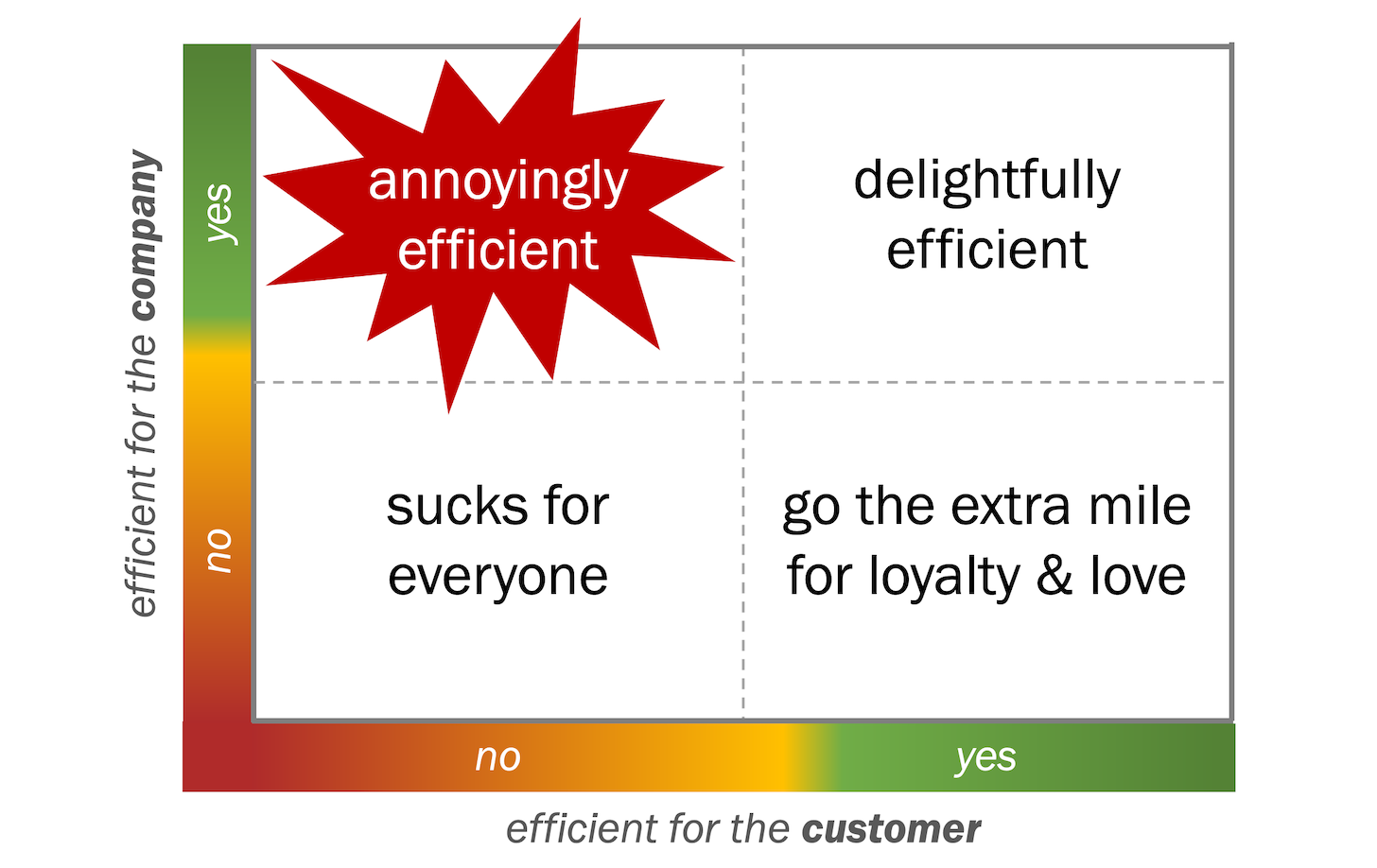
Over the past weeks, a veteran martech analyst described in a first-hand account how AI agents and automation behaved at two vendors he dealt with — once as a subscriber, once as a lead. Both experiences sat in what he called the annoyingly efficient upper-left quadrant of a 2×2 map: efficient for the company, costly for the customer relationship. For application owners the useful question is not "is this AI good enough", but "where does a person have to touch it before a customer notices the seam".
What went wrong in the support path, step by step
First conclusion: a broken path is worse than a slow path, because the customer keeps paying attention while the automation keeps not answering.
The subscriber had been receiving genuinely useful onboarding tips for weeks, at a sensible cadence, from a shared onboarding address rather than a named person. last week a billing question came up. Every help article, account screen and FAQ pointed to that same inbox. He emailed it. Nothing came back — not even an automated receipt. He waited a day and sent a follow-up. Still silence.
A couple of days later the same address delivered another cheerful onboarding tip. He replied, asked whether a different address was the right one for billing, and got no answer. After searching the app again for an instruction he had missed, he gave up. While the article was being written, another onboarding email landed, oblivious to every previous attempt.
What went wrong in the outreach path, step by step
First conclusion: a conversational opening without conversational memory is a trap. It raises an expectation the automation cannot keep.
In the second story, a new industry report was downloaded and a sales rep's name went on the form. Within a couple of minutes, a reply arrived — production-grade generative AI personalisation. The opening paragraph was built around the reader's work on chiefmartec, raised a concern about AI that was directly relevant, and asked a real question about why the report mattered. The only tell was speed. The reader wrote back, acknowledged the automation politely, explained the interest, and said he was probably not a prospect. No answer came.
Fine — self-disqualification. But a couple hours later the same rep's name appeared on a completely different email: Hello, $FIRST-NAME formatting, a reference to something unrelated to the download, and calendar slots for a demo. A week later came another template message, this time with $COMPANY-NAME filled in with a company that was not the reader's. That sequence had no memory of the exchange that had already happened.
How do you tell a wiring failure from a model failure?
Neither incident needs a hallucination to explain it. Most field complaints are plumbing. Use this triage table as the first diagnostic pass before you blame the model.
| Customer-visible symptom | Most likely layer | First check | Owner |
|---|---|---|---|
| Replies never arrive on a shared inbox | Routing rules / queue assignment | Is the destination queue staffed, and does an acknowledgement rule fire on "no match"? | Service operations |
| Wrong template continues the conversation | Sequence entry conditions | Does the engagement platform read reply events, or only form-fill events? | RevOps |
| Wrong company name or contact detail inserted | Data enrichment write-back | Source of truth per field, plus overwrite policy and confidence threshold | Data steward |
| Tone changes mid-thread | Two systems, one identity | Which system owns signature, sender name and reply handling | Campaign lead |
| Reply from the AI reads as unrelated | Retrieval / account context | Did the lookup fail silently, or return an empty context and let the model improvise? | AI application engineer |
That pattern matches the wider evidence base. An MIT study of enterprise AI adoption, State of AI in Business, reported that roughly 95% of generative AI pilots delivered no measurable return, and attributed the gap to workflow integration rather than model quality. Gartner's separate forecast that over 40% of agentic AI projects will be cancelled by the end of 2027 rests on the same root causes: escalating costs, unclear business value and inadequate risk controls. In other words, the failures buyers notice are usually orchestration failures.
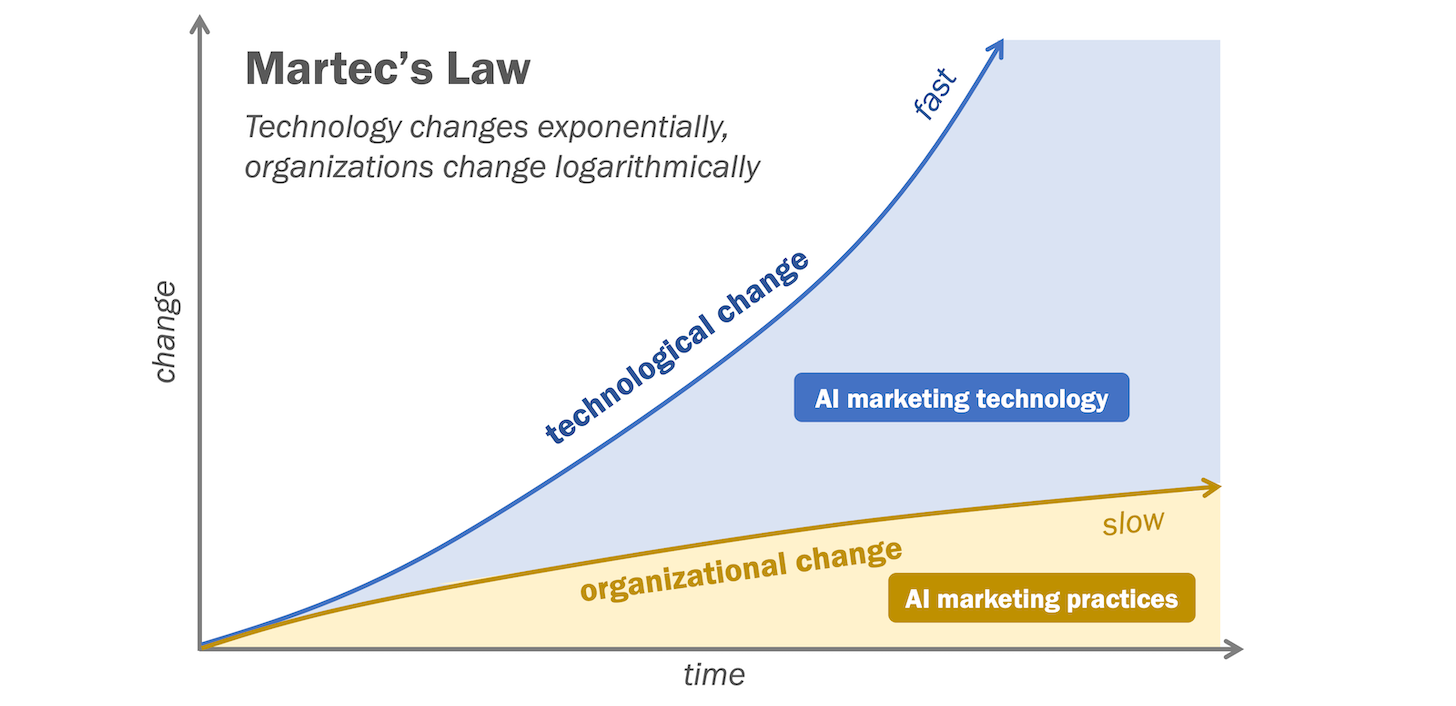
The observer of these two cases has written about marketing technology for 17 years, and he kept reaching for Martec's Law: technology changes quickly, organisations change slowly. Corollary for application teams — the people-and-process work is always under-budgeted.
How do you design human gates into an AI application?
Concretely, in six steps. OpenAI reported on 6 September 2026 that, over the preceding six months, more than half of successful four-to-eight-hour agent tasks still involved at least one human intervention — a useful calibration for anyone planning "set it and forget it" marketing or service workflows.
- Draw the boundary in three lines before you build. Write down when the automation may continue, when it must stop and ask a named person, and when it must never act autonomously (pricing, refunds, discount approval, contract terms, sending to an external party).
- Gate the first send. Any generative message that uses a human sender's name should be reviewed by that person, or at least mirrored into their inbox with a suppression window, before the sequence proceeds.
- Gate the reply, not only the send. An inbound reply is the highest-information event in the thread. Route it to a person within a stated SLA instead of letting a router re-enrol the contact into a campaign.
- Gate data writes. Enrichment results that would overwrite contact or company fields need a confidence threshold and a log entry; low-confidence writes should create a task, not a change.
- Give handoff real memory. When a bot hands to a human, the transcript plus the attempted resolution must arrive with it, so the customer never repeats the story.
- Gate the cadence. Every active journey needs a "stop if unanswered" rule: after two unanswered inbound attempts, suppress automated sends and escalate to a queue.
Regulators are converging on the same idea. EU AI Act Article 14 requires effective human oversight of high-risk systems — people able to understand, monitor, intervene, override or stop the output — with obligations that apply from 2 August 2026, while Article 50 transparency duties require users to know when they are interacting with AI. Even where the Act does not bind you, the article language is a decent template for an internal checklist: oversight capability, log retention, and a named accountable role.
Which decisions should never run unattended?
| Decision type | Recommended gate | Why |
|---|---|---|
| Price, discount, credit | Named approver with a monetary limit | The company, not the model, is bound by the promise |
| Refund, compensation, timing promises | Record intent, then transfer to a person | Financial exposure and audit trail |
| Contract or policy interpretation | Human sign-off, always | Edge cases are infinite |
| Outbound on a human rep's identity | Inbox mirroring plus opt-out window | Reputation belongs to that person |
| CRM field overwrite from enrichment | Confidence threshold plus change log | Bad data compounds across every downstream journey |
| Escalation after failed contact | Automatic stop, then human triage | Prevents the cheerful-reminder effect |
How do you test before real customers are exposed?
Run a secret shopper exercise with randomised prompts, not a rehearsal of your demo script. Checklist:
- Fresh-eyes tester. Prefer someone outside the owning team; internal staff inherit the same blind spots and politics.
- Hostile inputs. Missing fields, a document photographed at an angle, a spreadsheet with one column removed, a file named "final_v2_really_final", an attachment the parser cannot read.
- Emotional and off-script turns. Anger, a mid-thread change of intent, a request to speak to a person, a question outside the knowledge base.
- Transparency of the exit. Measure the steps and the average time between "I want a human" and a live human, not only whether the button exists.
- Outage simulation. Kill the external API, the enrichment service and the queue in turn; confirm the agent pauses rather than guessing.
- Two-sided logging. Store the generated message and the reason it was allowed to send.
The discipline to enforce: AI and automation are never going to be 100% correct, so the test plan should be scored on what happens at the boundary rather than on the happy path.
How often should live agents be inspected, and by whom?
Treat customer-facing automation like equipment that moves people: elevators need periodic certification, and so do journeys.
| Cadence | What is reviewed | Artefact to file | Sign-off |
|---|---|---|---|
| Weekly | Unanswered-inbox count, suppressed journeys, error rates, lowest-confidence answers | Exception log with ticket IDs | Service operations |
| Monthly | Routing rules, queue staffing, sender identity and signature consistency | Config diff report | RevOps |
| Quarterly | Data definitions, field sources of truth, integration health between agent platform and engagement platform | Integration test results | Data steward |
| Quarterly | Content, branding and offer relevance; dead promotions | Content review note | Campaign lead |
| Per release | Prompt, model version and tool-permission changes | Change record with timestamp and reviewer name | AI application engineer |
Repeatable test harnesses help, but keep human judgement in the loop, even if it is only a post-hoc read of what happened. Timestamp and sign every inspection; unsigned reviews are not evidence.
What should you measure if not deflection?
Automation rate is an internal metric wearing a customer costume. Score the chain instead.
| Metric | What it reveals | Baseline before scaling |
|---|---|---|
| Reply-continuity rate (% of inbound replies that get any response in SLA) | Whether the dead-end inbox exists | Set per journey, publish per owner |
| Human-request completion (time and steps from request to live agent) | Whether the escape hatch is real | Median plus 90th percentile |
| Context carry-over rate on handoff | Whether the customer must repeat themselves | Target near-total; log every miss |
| Wrong-field write-backs per 1,000 contacts | Enrichment damage | Track trend, gate the worst fields |
| Negative-reply and unsubscribe rate on automated sends | Tone and relevance drift | Per template, per sequence step |
| Full-chain cost | Labour saved against rework, compensation and churn | Review quarterly, three months minimum |
Forrester's Predictions 2026 for customer service expects service quality to dip in the near term as teams wrestle with deployment complexity and weak oversight — a reasonable argument for measuring the chain, not the interception rate.
What are the common misconceptions to avoid?
- "Faster is better." A reply in seconds that contradicts the thread is slower overall, because the customer restarts.
- "One AI, one conversation." In the second case, the SDR agent and the sequence engine were almost certainly two products with a weak integration at best.
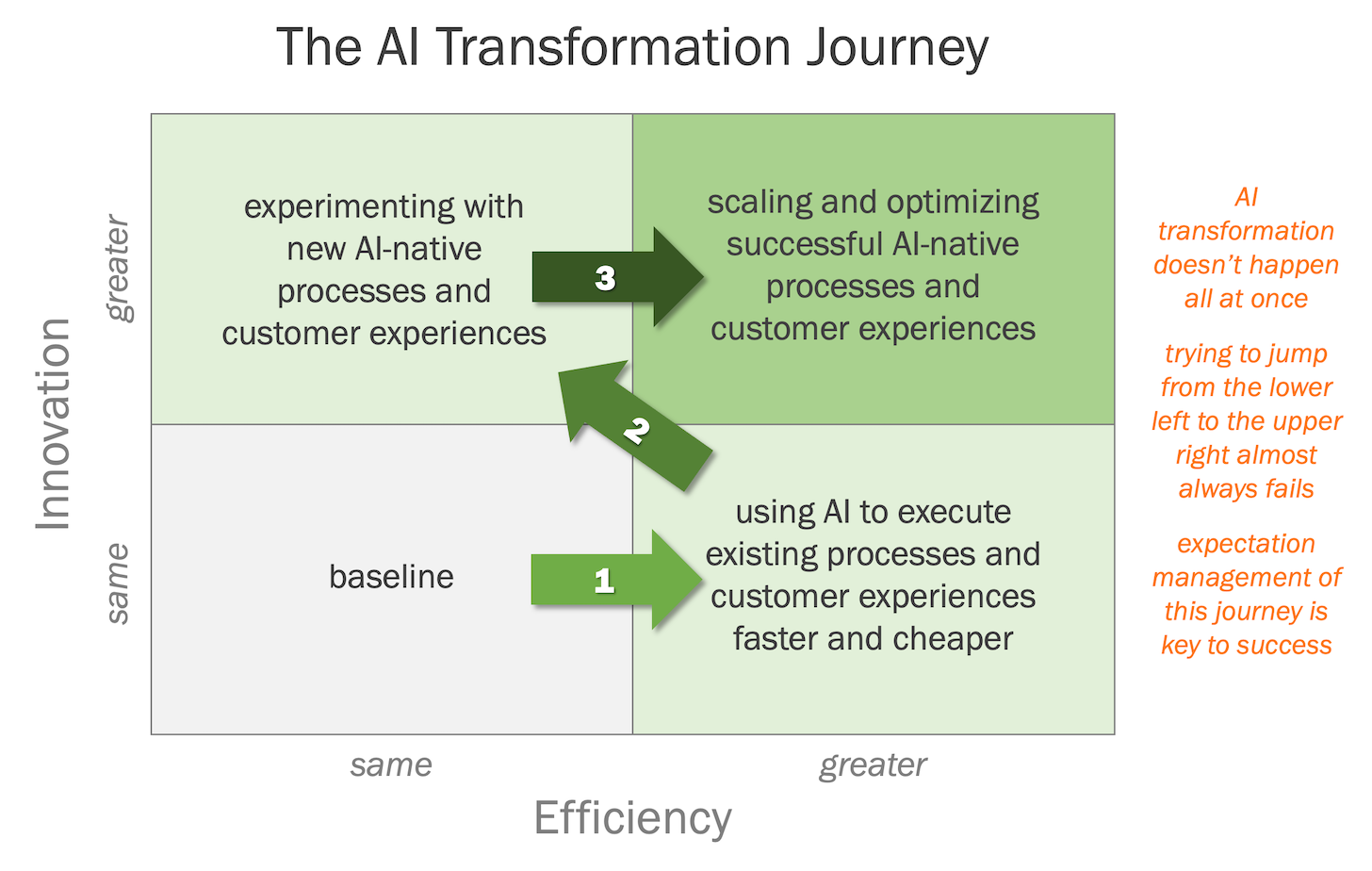
- "Keep a human out of the loop to look transformative." Top-down, urgent-but-vague adoption edicts push teams to ship before the dependencies and ripple effects are understood. Go slow to go fast.
- "Pilots can share the production stack." Distinguish between the laboratory and the factory. Frans Riemersma's framing — the stack as laboratory for experiments, and the stack as factory protecting current revenue — is worth enforcing as a hard separation, with guards against lab leaks.
- "Secret shopper is optional." It is hardest in B2B, because enrichment services lock onto a tester's identity with variable accuracy, but the attempt still surfaces failures real users hit.
- "Governance is a future problem." Monitoring and governance capability in martech platforms is where the current gap sits, and where orchestration has to mature.
FAQ: what application teams ask next
Is the problem the model or our stack?
Start with the wiring. Route, queue staffing, entry conditions and field ownership explain most visible complaints; treat model behaviour as the second hypothesis and test it with the triage table above.
How long should an AI be allowed to run unattended?
Shorter than the marketing suggests. OpenAI's own 6 September 2026 research report states that over half of successful four-to-eight-hour tasks still required at least one human intervention, so plan checkpoints rather than overnight autonomy.
Should every automated email be reviewed by a human?
No — but every message sent under a named person's identity, and every price, refund or timing promise, needs a gate or a mirrored inbox with a suppression window.
Does a visible "talk to a human" button count as an escape hatch?
Only if the exit works. Test the time and number of steps from request to a live agent, and confirm the transcript arrives with the customer.
When do we scale from one journey to many?
When the exception log is quiet for a full quarter, handoffs carry context, and each automation has a signed, timestamped inspection. Scaling on an unstable foundation converts tech debt into customer friction.
Action plan: the next seven days
- Inventory every AI agent and automated journey that touches a customer, with one accountable owner each.
- Send one real enquiry to your own shared inbox from an unfamiliar address and time the response; record the silence as a defect.
- Write the three-line boundary (continue / ask / never) for the riskiest journey you run.
- Mark price, refund and timing intents as no-answer in prompts and routing: log, transfer, state the wait.
- Run one adversarial test session with randomised, messy inputs; fix or pause whatever breaks.
- Add reply-continuity rate and human-request completion to your weekly review.
- Schedule the first signed quarterly inspection for every live automation.
Deploying an agent keeps getting easier; keeping dozens of them aligned is the operational craft. Reach the ItInsightsWorld AI applications desk at contact@itinsights.com if you want to share a failure pattern for the next playbook — the case studies are better when they are anonymous and specific. Reported by James Hartley.
Reference sources
- OpenAI, "Research acceleration: The view inside OpenAI", 6 September 2026 — https://openai.com/index/research-acceleration-view-inside-openai/
- Gartner press release, "Gartner Predicts Over 40% of Agentic AI Projects Will Be Canceled by End of 2027", 25 June 2025 — https://www.gartner.com/en/newsroom/press-releases/2025-06-25-gartner-predicts-over-40-percent-of-agentic-ai-projects-will-be-canceled-by-end-of-2027
- Fortune on the MIT NANDA report "State of AI in Business", 18 August 2025 — https://fortune.com/2025-08-18/mit-report-95-percent-generative-ai-pilots-at-companies-failing-cfo/
- EU Artificial Intelligence Act, Article 14 (Human Oversight) — https://artificialintelligenceact.eu/article/14/
- EU Artificial Intelligence Act, Article 50 transparency guide — https://artificialintelligenceact.eu/transparency-rules-article-50/
- Forrester blog, "Predictions 2026: AI Gets Real For Customer Service", 10 November 2025 — https://www.forrester.com/blogs/2026-the-year-ai-gets-real-for-customer-service-but-its-not-glamorous-work/