
ItInsightsWorld AIapplications: Tesla FSD Latvia and Slovakia Show Real-World AI Deployment Risks
For teams evaluating AI-enabled products in regulated environments, the most useful signal is not whether a feature receives approval, but what the approval requires in daily operation. Reuters reported on October 27 that Tesla FSD, a driver-assistance software, has been approved in Latvia and Slovakia. The decision gives local vehicle owners access to a capability they have pressed for, while a Reuters test ride of the same technology recorded hazards at a barrier gate and at a Tesla Supercharger site. For ItInsightsWorld's AIapplications readers, the episode is a compact case in how AI reaches users: regulatory recognition, market rollout, human responsibility, subscription economics, and edge-case failure can happen almost simultaneously.
Approval status as an AI deployment checkpoint
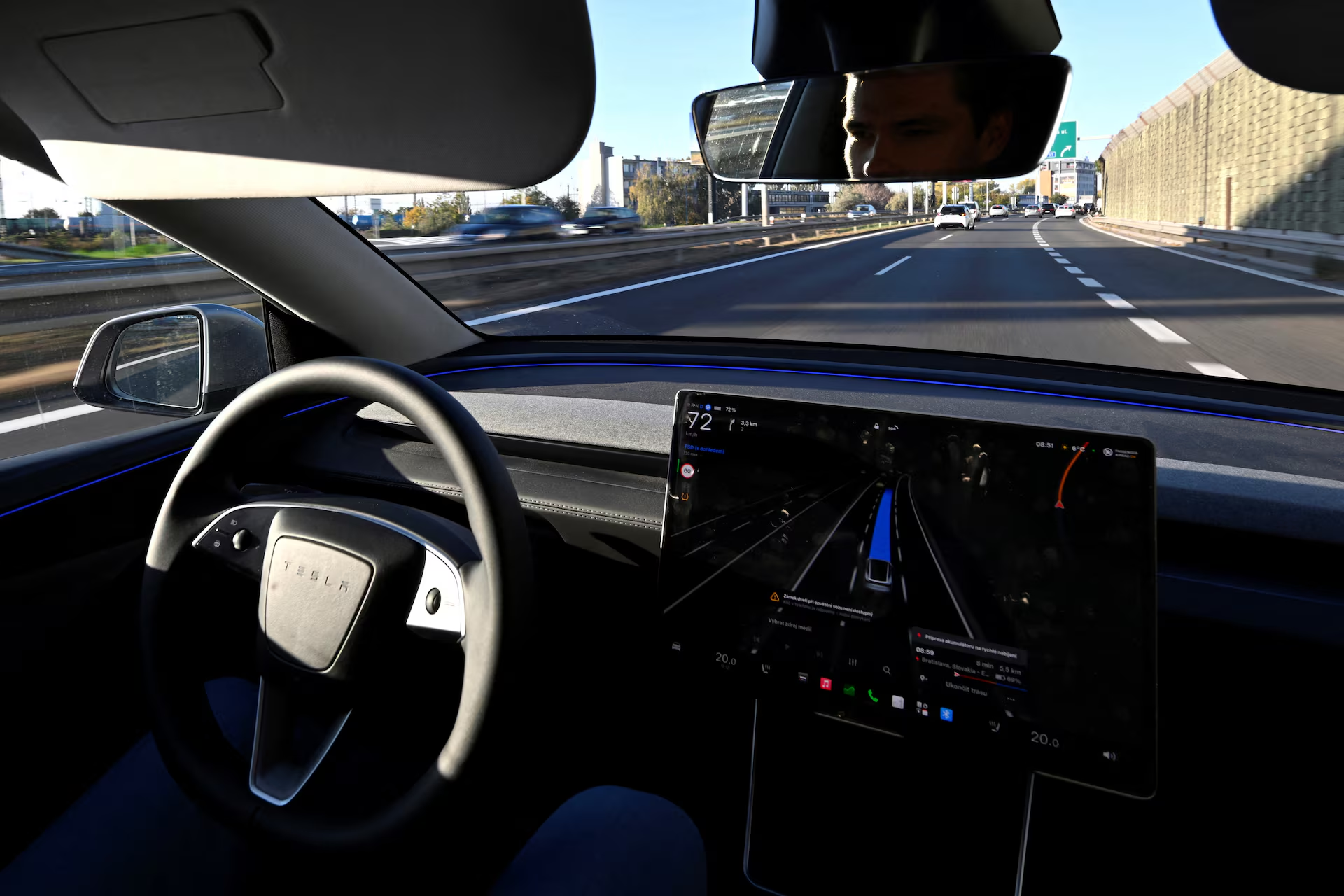
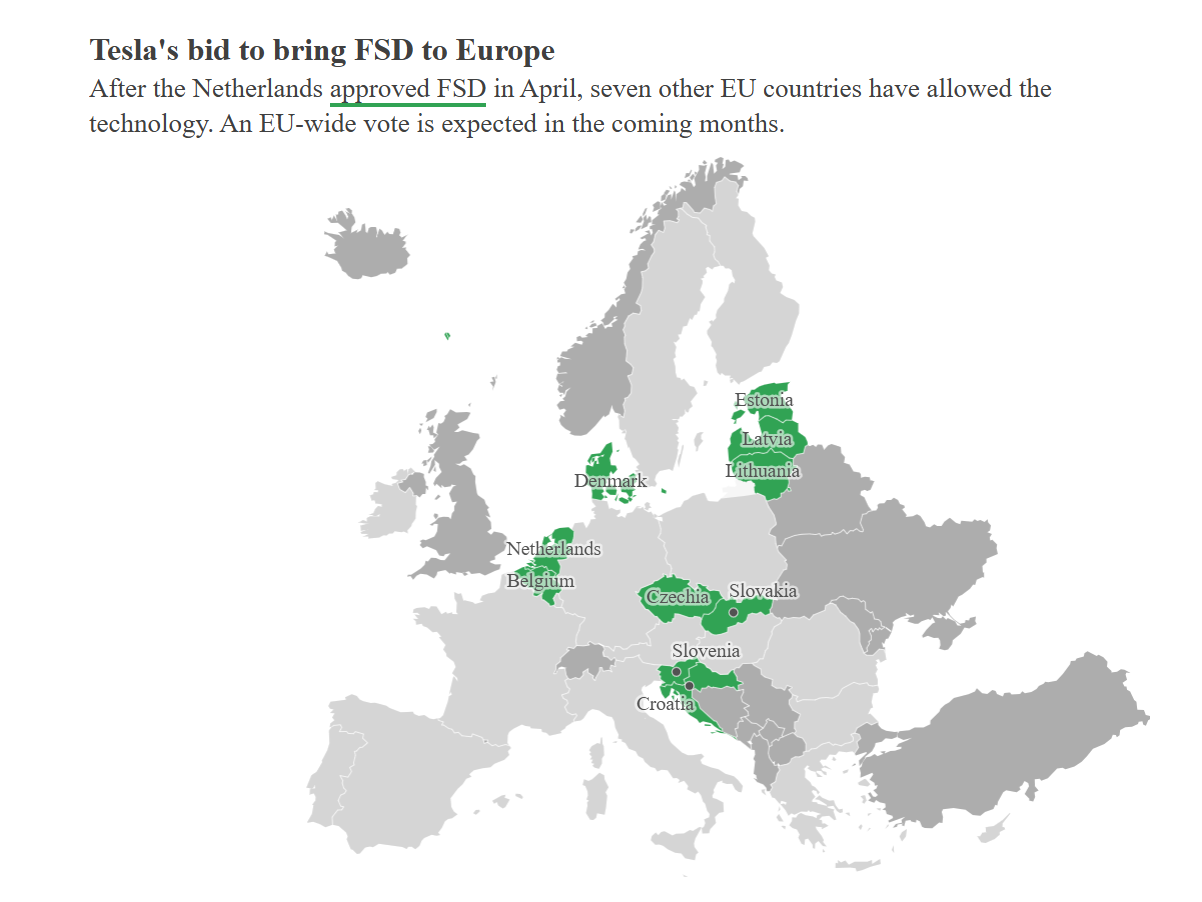
Latvia became the 10th European country to approve Tesla's driver-assistance software on Monday. The approval applies to the system Tesla recently renamed in Europe from Full Self-Driving (Supervised), also written as FSD (Supervised), to Tesla assisted driving, abbreviated TAD. Slovakia had approved the technology earlier this month. Together, the two decisions are the latest step in Tesla's European deployment effort.
According to the Latvian transport department, the local road traffic safety authority accepted a provisional European Union type approval issued by the Netherlands vehicle administration. Tesla Europe said the feature had been approved in Latvia and that the software push would begin soon, while the specific date had not been published.
The user story: expected benefits, manual takeover, and pricing
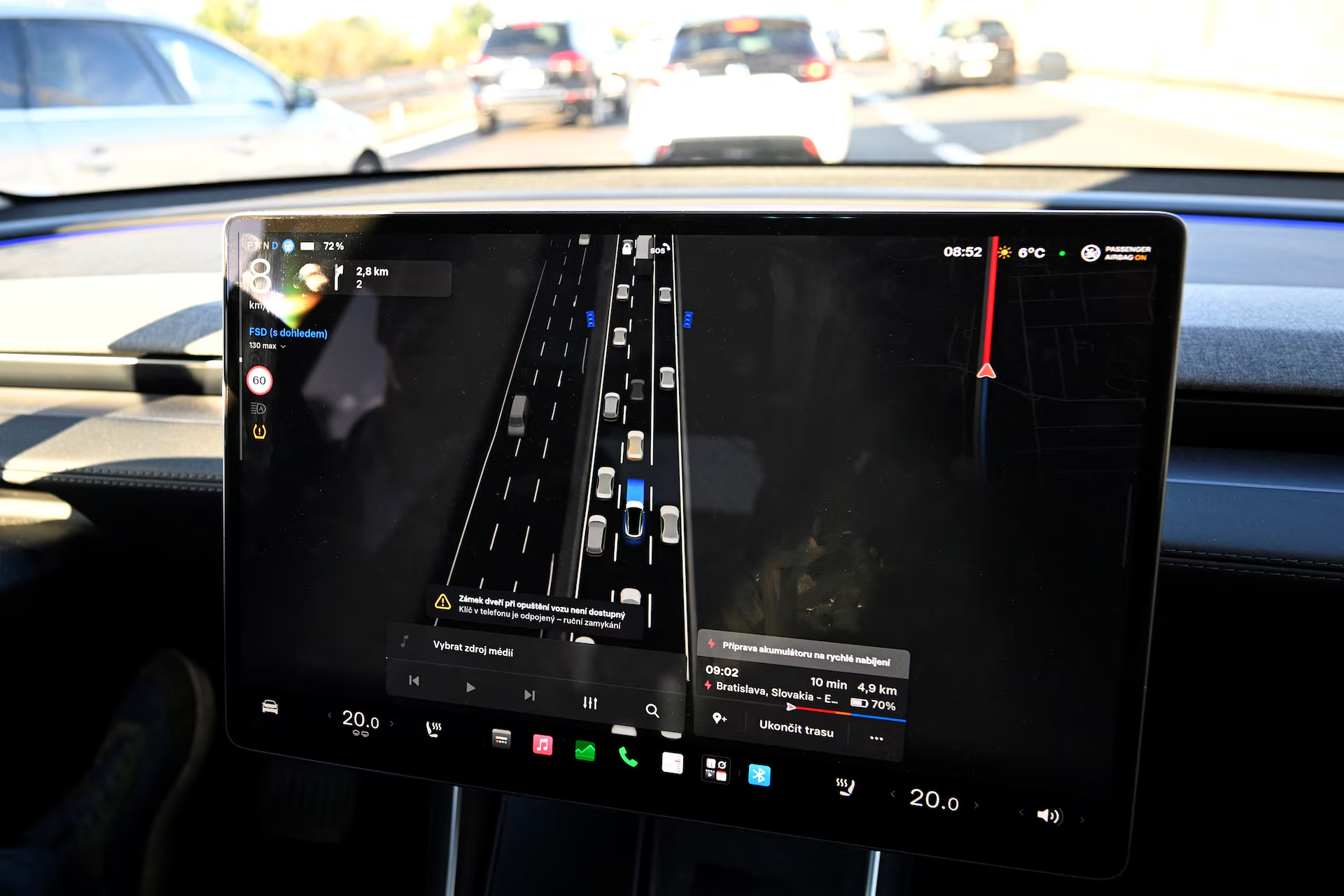
Igor Marcek, 35, is a financial agent and life planning adviser in Bratislava who bought a Tesla in Slovakia two years ago. After TAD was approved, he said he increasingly looked forward to the technology's prospects. He hopes that one day a car can drive itself, saving time and energy and allowing people to attend to other matters while the vehicle is in motion.
Reuters rode in a Tesla equipped with TAD and found that the system can handle some routine driving situations smoothly, including traffic on a busy highway and merging into vehicle streams. It also found safety problems. When the car approached a closed barrier gate, it did not slow down, and Marcek had to brake hard. At a Tesla Supercharger site, the car failed to enter an empty charging bay, and Marcek again took over the vehicle.
The subscription price for the feature is EUR 99 per month, about USD 110.92. The test did not turn the story into a simple success report; it showed that a feature can be commercially available, useful in some conditions, and unreliable in specific boundary scenarios.
Responsibility design: L2 means the human stays in the loop
The Latvian transport department described TAD as an L2 driver-assistance system. Under that framing, the driver must continuously monitor traffic conditions, be ready to take over at any moment, and bear responsibility for the consequences of traffic violations or accidents. In Marcek's words, "This technology is still developing, so you must stay alert and watch what the vehicle is doing."
Adoption pressure and regulatory friction
Reuters reported that Tesla enthusiasts across Europe have actively called for faster deployment. Tesla and its chief executive officer, Elon Musk, have also frequently encouraged owners to express their requests to local authorities.
Marcek said that in Slovakia, a Tesla owners club with 1,500 registered members once organized a vehicle light show outside the transport department to draw regulatory attention to the technology. Kristian Kratochvil, president of the club, said that after the Netherlands took the lead in approval, the club contacted the Slovak transport department, and the club often communicates with that department to ask about the approval progress.
Tesla has said that TAD can make collision-avoidance capability improve by more than four times and save lives. Reuters noted that safety researchers have great controversy over these data. Across the EU, the technology faces growing regulatory resistance. Regulators in some countries have raised safety concerns and questioned whether drivers can maintain sufficient attention throughout use.
A comparison table for application evaluators
| Deployment factor | Reported fact from the Tesla case | Evaluation cue for AI applications |
|---|---|---|
| Regulatory entry | Latvia became the 10th European country to approve Tesla's driver-assistance software; Slovakia approved the technology earlier this month. | Confirm which authority approved the feature, on what legal basis, and whether a rollout date is already published. |
| Product naming | Tesla renamed the software in Europe from Full Self-Driving (Supervised), or FSD (Supervised), to Tesla assisted driving, abbreviated TAD. | Do not accept feature names as claims of full capability; map the name to the stated automation level. |
| Human responsibility | The Latvian transport department said TAD is an L2 driver-assistance system, requiring continuous monitoring, readiness to take over, and responsibility for violations or accidents. | Check whether the user interface, policy, and training align with human-in-the-loop liability. |
| Real-world behavior | Reuters found smooth handling in busy highway traffic and merging, but no deceleration at a closed barrier gate and failure to enter an empty charging bay at a Tesla Supercharger site. | Test boundary scenarios separately from general capability claims. |
| Commercial terms | The subscription price is EUR 99 per month, about USD 110.92. | Compare recurring user cost against the verified task scope and takeover burden. |
| Advocacy and oversight | Enthusiasts in Europe called for faster deployment; a Tesla owners club with 1,500 registered members organized a light show outside the transport department. | User demand can accelerate adoption, but regulator attention can slow deployment. |
A step-by-step review using only the reported case
- Identify the approval event: Reuters reported on October 27 that Tesla FSD had been approved in Latvia and Slovakia.
- Identify the authority path: the Latvian transport department said the local road traffic safety authority accepted a provisional European Union type approval issued by the Netherlands vehicle administration.
- Identify the rollout signal: Tesla Europe said the push would begin soon, but the specific date had not been published.
- Identify the automation level: TAD is described as L2, so the driver remains the continuous monitor.
- Identify the edge cases: Reuters recorded the barrier-gate issue and the Tesla Supercharger charging-bay issue.
- Identify the adoption tension: enthusiasts and a Tesla owners club pushed for deployment, while regulators raised safety and attention concerns.
- Identify the contested metrics: Tesla says collision avoidance can improve by more than four times and save lives; safety researchers dispute these data.
Risk checklist drawn from the FSD deployment report
- Confirm whether the product is being called full autonomy, assisted driving, or L2 driver assistance. In the Tesla case, the public naming moved from Full Self-Driving (Supervised) to Tesla assisted driving while the stated level remained L2.
- Confirm who has final responsibility during use. The Latvian transport department said drivers must stay attentive, be ready to take over, and bear consequences.
- Test boundary locations: barrier gates and charging stations may be simple for humans but failure-prone for the system.
- Record takeover behavior: in the Reuters test, Marcek had to brake hard at a closed barrier gate and again took over at a Tesla Supercharger site.
- Verify pricing against capability: EUR 99 per month, about USD 110.92, does not by itself prove the feature removes human effort.
- Watch advocacy campaigns: the Tesla owners club with 1,500 registered members and vehicle light show illustrate how user pressure can shape regulatory timelines.
- Challenge vendor statistics: safety researchers disputed Tesla's more than four times collision-avoidance improvement claim.
FAQ: What the Latvia and Slovakia approvals actually tell application teams
Was Tesla FSD approved in Latvia and Slovakia? Yes. Reuters reported on October 27 that Tesla FSD had received approvals in both countries. Latvia became the 10th European country to approve Tesla's driver-assistance software, and Slovakia approved the technology earlier this month.
Is TAD the same as the former FSD (Supervised) name? Tesla recently renamed the software in Europe from Full Self-Driving (Supervised), also written as FSD (Supervised), to Tesla assisted driving, abbreviated TAD.
Can the system drive without human attention? No. The Latvian transport department described TAD as an L2 driver-assistance system. Drivers must continuously monitor traffic, be ready to take over, and bear responsibility for traffic violations or accidents.
Did the Reuters test show only positive behavior? No. The test observed smooth handling of highway traffic and merging, but the car did not slow down at a closed barrier gate and failed to enter an empty charging bay at a Tesla Supercharger site. Marcek had to intervene in both situations.
Why is the approval contested in parts of the EU? Regulators have safety concerns and question whether drivers can maintain sufficient attention. Safety researchers also disputed Tesla's claim that the system can improve collision avoidance by more than four times and save lives.
Common misconceptions in AI application rollout
- Approval equals readiness for unattended use. The Tesla case shows the opposite: TAD is described as L2, and human monitoring remains mandatory.
- Marketing language equals technical scope. The rename from Full Self-Driving (Supervised) to Tesla assisted driving shows that naming can shift faster than the responsibility model.
- User enthusiasm equals regulatory consensus. Owners in Europe have pushed for deployment, and some regulators have raised concerns.
- Vendor metrics equal settled truth. Tesla's more than four times collision-avoidance improvement claim is disputed by safety researchers.
- Smooth average cases guarantee edge cases. Reuters found good performance in some highway situations but failures at a barrier gate and a charging bay.
Action advice for ItInsightsWorld readers
For enterprise teams assessing AI applications, the Latvia and Slovakia story suggests a practical sequence: start with the regulator's wording, not the product's name; require a clear statement of the automation level; test the rare but consequential boundary scenario; compare the subscription price with the takeover workload; and treat advocacy pressure and vendor statistics as inputs to a deeper verification process. In this case, the reported facts do not point to a simple conclusion that AI is either safe or unsafe. They point to a narrower application judgment: the system may be usable where users accept continuous supervision, while barrier gates, charging-site maneuvers, and disputed safety claims remain the areas that need separate proof.