
ItInsightsWorld AI Applications: Hurricane Forecasting Shows How to Operationalize AI Tools
As AI applications move from pilot demos into high-stakes operational workflows, the case reported by the United States National Public Radio (NPR) on October 26 provides a useful deployment lesson. Hurricane forecasters are increasingly using artificial intelligence to make forecasts, and the technology is changing the field rapidly. When the first hurricane of this month's Atlantic hurricane season formed, one artificial-intelligence model produced a path forecast that beat conventional models.
Early in October, Hurricane Isaias made landfall near Destin, Florida, in the United States, as a Category 2 hurricane. Conventional forecast models initially judged that it would continue west toward southeast Louisiana. The GoogleDeepMind model, often written Google DeepMind, correctly judged from the beginning that the hurricane would strike the western Florida Panhandle.
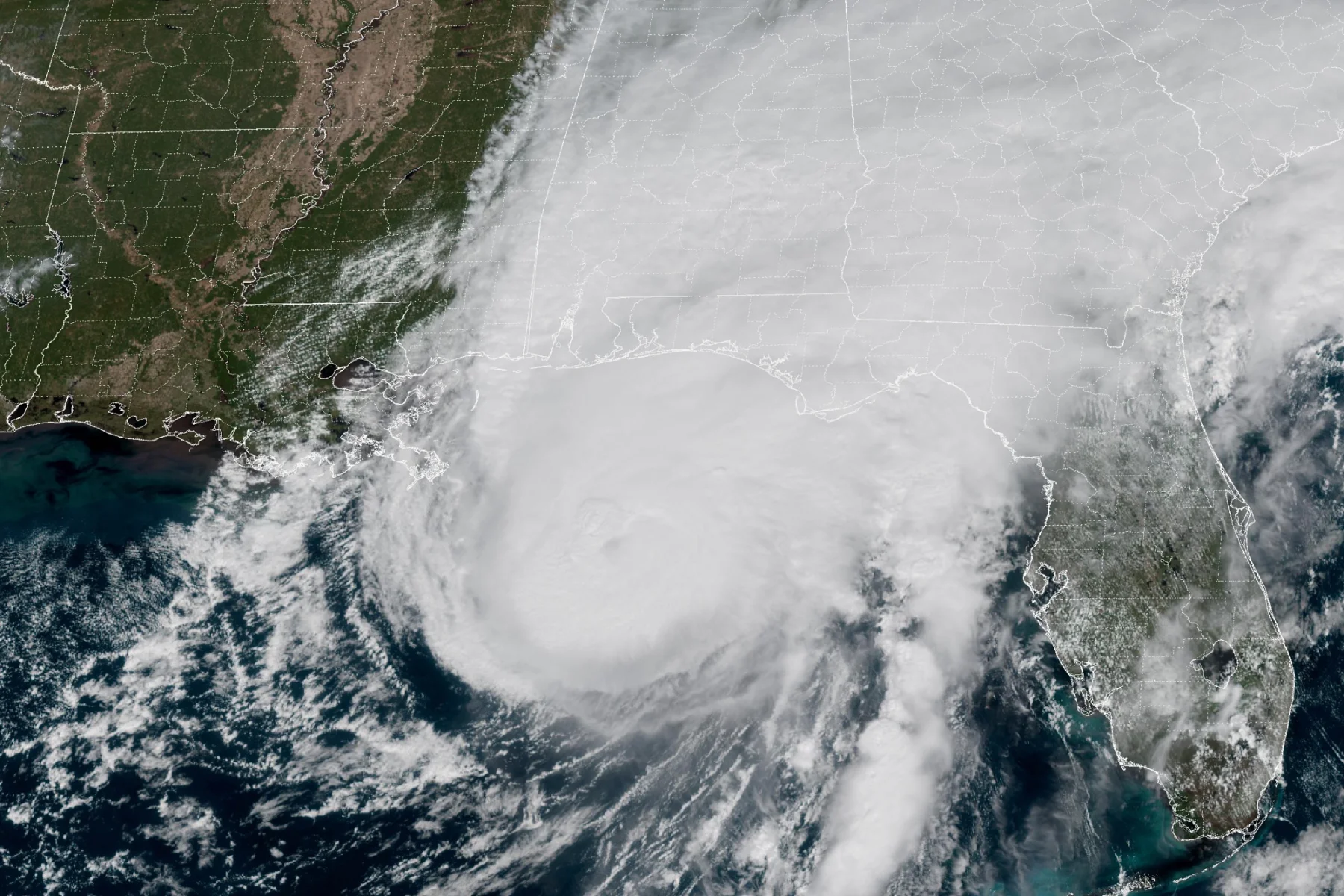
Case snapshot: a fast adoption path with clear limits
Michael Lowry, a veteran Miami meteorologist and hurricane expert who previously advised the United States Federal Emergency Management Agency and the National Hurricane Center, said: “Especially Google DeepMind, over the past few years it has indeed proven itself to be a gold-standard model.” He added: “That model is the best-performing computer model we have ever seen, far ahead. That is it.”
The United States National Hurricane Center began including the GoogleDeepMind model in official forecasts for the first time last year. Brian McNoldy, a hurricane researcher at the University of Miami, said that by the end of the 2025 Atlantic hurricane season it was already one of the best models for predicting storm tracks and intensity. He noted that new models usually need years of refinement after introduction. “This is a situation we are not used to — a brand-new model that had just arrived soon became the best model,” McNoldy said. “It was almost ranked first as soon as it appeared, which is quite an achievement.”
What the two forecasting approaches actually do
Traditional hurricane models are built on physical laws. They depend on atmospheric data measured in real time by satellites and aircraft, such as temperature, humidity, pressure and wind shear. They then use complex equations to infer a storm’s possible path and intensity.
Artificial-intelligence models follow another route. They depend more on history, analyzing thousands of past hurricanes and the atmospheric data that accompanied them to identify patterns.
Lowry said: “An AI model, apart from this current picture, actually knows nothing about the atmosphere.” He added: “Apart from that, it does not rely on the governing equations of atmospheric motion, that is, physical laws, to make forecasts.” Lowry pointed out that most of the people who design and develop these models are not meteorologists: “They are software engineers doing neural-network development.” A neural network is a set of computer algorithms modeled on the human brain and trained to find patterns in massive data.
Traditional models versus AI models
| Dimension | Traditional physics model | AI model |
|---|---|---|
| Core basis | Physical laws and atmospheric governing equations | Patterns learned from thousands of past hurricanes and their atmospheric data |
| Data emphasis | Real-time satellite and aircraft measurements such as temperature, humidity, pressure and wind shear | Current picture plus historical training data |
| Update pace | Traditional models are updated at most once a year | AI model updates can take months or even weeks |
| Operational perception | Familiar to meteorologists, but slower to improve | Often looks like a black box; users may not know why forecasts are right or wrong |
| Performance note | Beat in the Isaias track forecast by GoogleDeepMind | Google DeepMind beat traditional physics models on path but did poorly on intensity |
| Market status | Multiple validated systems remain in use | Many weather-forecast AI models are untested; the two shown to be most accurate are Google DeepMind and the European Centre for Medium-Range Weather Forecasts model in the United Kingdom |
Risk boundary: accuracy alone does not make a forecast operable
Lowry said the models can look like a black box: “We do not know why they can forecast correctly, and we do not know why they forecast incorrectly.” For meteorologists, relying on a system they do not fully understand is uncomfortable, especially during storms when millions of people may depend on the forecast. McNoldy said: “This makes us somewhat uncomfortable, because we want to know why you can reach the correct answer.” He added: “And I think we do not know — at least I do not know.”
Not every AI model performs well. Lowry said many weather-forecasting AI models on the market remain untested. The two models currently shown to be most accurate, despite their flaws, are Google DeepMind and the model developed by the European Centre for Medium-Range Weather Forecasts, headquartered in the United Kingdom.
In the Isaias path forecast, GoogleDeepMind beat traditional physics models, but it did not do well in predicting storm intensity. A photo taken by the Associated Press on October 10 showed people in Destin retrieving belongings from a collapsed boat house after Isaias.
Workflow: how the National Hurricane Center puts models to use
When National Hurricane Center forecasters prepare official forecasts, they use multiple validated models at the same time, including artificial-intelligence models and traditional models. “Every storm has different forecasting challenges,” said National Hurricane Center Director Michael Brennan. “That is why we take an ensemble approach and mix the best models.”
Human interpretation remains necessary. Forecasters must read model output and decide what to tell the public. During active hurricane periods, the National Hurricane Center issues updates every six hours. Models themselves sometimes shift sharply between two updates, and forecasters must convert changing predictions into guidance that people can use for action.
“One major value provided by human forecasters is continuity,” Brennan said. “We use our professional knowledge and understanding to turn hurricane forecasts into hazard information; that is the thing people really need to pay attention to.”
Implementation steps visible in this case
- Validate before adoption: do not add a new model to official workflows until its track record is compared with established systems.
- Start with a limited, high-value task: the GoogleDeepMind model first proved useful in path forecasting, even though intensity forecasting remained weaker.
- Use an ensemble instead of a single winner: combine several validated models, both traditional and artificial-intelligence, because each storm presents different challenges.
- Keep a human in the loop: domain experts must translate model outputs into public hazard information.
- Set a refresh cadence: official updates were issued every six hours, while model changes could occur between two updates.
- Create a feedback channel: Brennan said his team periodically gives feedback to Google DeepMind to help improve the model.
Why progress can look sudden
Scientists expect related technology to advance quickly. Brennan said the GoogleDeepMind model still needs improvement. It beat other models in tracking Isaias path, but its intensity forecast was worse than the National Hurricane Center’s blended forecast. Google did not respond to NPR’s question about the matter.
Brennan said: “The future has been changing all the time.” He also said: “It has never been a single thing that drives these advances.” He pointed out that, not long ago, forecasters could not predict how strong a storm would be within two days. That changed because forecasting models improved and because satellites and aircraft collected better data. “For intensity forecasting, the error is only about half of what it was during Hurricane Katrina,” Brennan said.
Lowry thinks the most exciting feature of AI is the speed of improvement. AI models can be updated in months or even weeks, while traditional models are updated at most once a year. “The skill and hurricane-prediction progress they achieved within one year took us 10 years, or even more than a decade, in the past,” Lowry said.
Even so, Lowry said he does not worry that artificial intelligence will replace people. “For me, I have not had some kind of survival crisis because of AI,” Lowry said. “If anything, I think it is a blessing for our industry.”
Checklist for AI application leaders
- Does the model have a validated record against existing systems?
- Is the failure mode understood, such as path accuracy versus intensity accuracy?
- Are domain experts kept responsible for interpreting output and public messaging?
- Is there an ensemble option when no single model can be trusted alone?
- Can the organization update operations around months-or-weeks model change cycles without assuming full model transparency?
- Is there a feedback loop with the model developer?
Common misconceptions
- “Best ranking means use it alone.” The case shows official forecasters still mix several validated models.
- “Strong path forecast means strong overall forecast.” GoogleDeepMind beat traditional models on the Isaias path, but intensity prediction did poorly.
- “AI will soon replace forecasters.” Lowry said he does not see artificial intelligence as a replacement; he views it as a blessing for the industry.
- “All weather AI models are ready.” Lowry said many weather-forecasting AI models are untested; only two are shown to be most accurate, despite flaws.
Action recommendations
For teams evaluating AI applications, this hurricane case suggests a practical path: treat the model as a component in an operational workflow, not as a replacement for domain judgment. Validate the model on the task where it may add value, keep fallbacks through an ensemble, preserve human continuity in communication, and formalize feedback so model updates can be absorbed quickly without abandoning risk controls.
FAQ
Did one AI model beat traditional models in this case?
Yes. In the path forecast for Hurricane Isaias, the GoogleDeepMind model beat traditional physics models, but it did not perform as well in forecasting intensity.
What does “black box” mean here?
Lowry said users may not know why the models forecast correctly or incorrectly. That uncertainty is notable during storms when millions of people may rely on the forecast.
Why did the National Hurricane Center keep traditional models in the mix?
Brennan said every storm has different forecasting challenges, so the center uses an ensemble approach and mixes the best validated models rather than relying on a single one.
How fast can AI-related forecasting improve?
Lowry said AI models can update in months or even weeks, while traditional models update at most once a year. He said the progress achieved within one year would previously have taken 10 years or even more than a decade.